
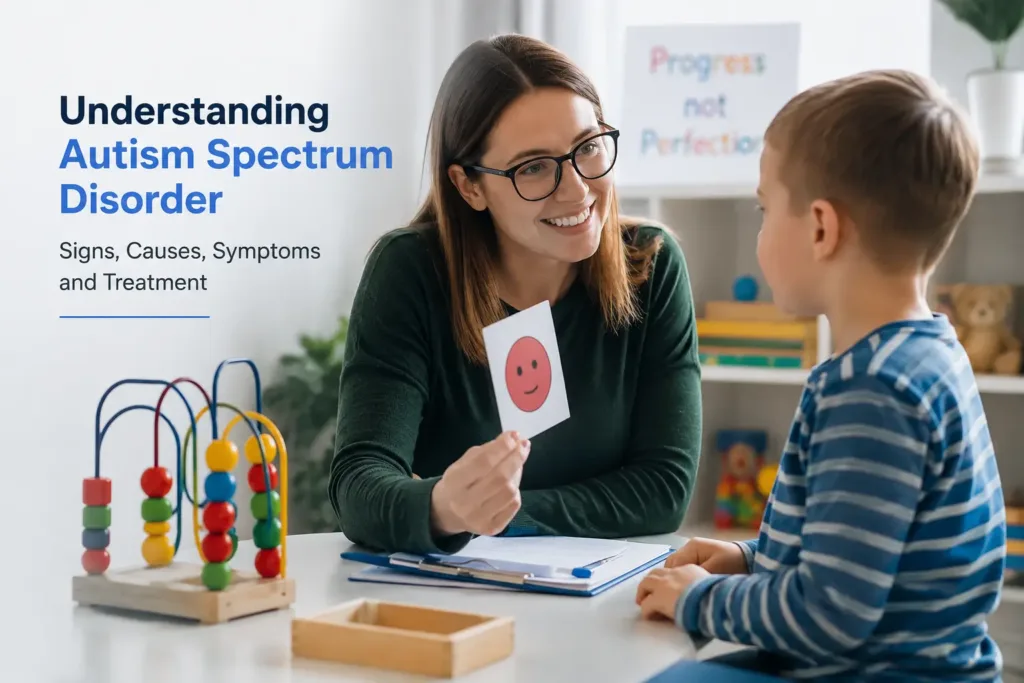
Every child experiences the world differently. For children with Autism Spectrum Disorder (ASD), communication, social interaction, and behavior may develop in unique ways. ASD is a developmental disorder that affects how an individual communicates, behaves, an interacts with others. It is referred to as a spectrum because it encompasses a wide range of symptoms and capabilities. Some people may require significant support in their everyday lives, whereas others can get by with little support.
Autism typically appears in early childhood, usually before the age of three. Neither is it a disease nor something that can be cured. Rather, it is a different way the brain evolves and receives information. With proper guidance and understanding, autistic individuals can learn, develop, and live fulfilling lives.
Understanding Autism Spectrum Disorder
To have a better glimpse into autism spectrum disorder, it is beneficial to consider the key areas that it targets:
- Communication
- Social interaction
- Behavior and interests
Children and adults with ASD might struggle to communicate as well as to understand others. For example, they can avoid eye contact, struggle with conversations, or prefer to play alone. These problems can vary from person to person.
Meanwhile, most autistic individuals possess special strengths, including excellent memory, attention to detail, and strengths in subjects such as math, music, or art.
Common Signs and Symptoms of Autism Spectrum Disorder
Autism symptoms may manifest differently in each individual; however, there are certain common symptoms that may be observed by parents and caregivers.
Communication and Social Signs
- Limited eye contact
- Language or speech problems or delays.
- Difficulty with understanding emotions or social cues.
Behavioral Signs
- Repetitive behaviors, such as hand flapping or rocking.
- Strong interest in particular issues.
- Need for routines and difficulty with change
- Sensitivity to sounds, lights, or textures.
These signs can occur early, but in some cases, a child may develop and show them later.
What are the causes of Autism Spectrum Disorder?
No single cause of autism spectrum disorder is known. It may also be associated with a set of genetic and environmental determinants.
The factors could include:
- History of autism in the family.
- Differences in brain development
- Some of the conditions in pregnancy.
You should know that autism is never caused by the kind of parenting, vaccines, or individual preferences. These are prevalent myths that have been disproved.
How Is Autism Spectrum Disorder Diagnosed?
The early diagnosis of children with autism is very important. It enables them to get assistance when it is needed.
Diagnosis usually involves:
- Observation of the behavior of the child.
- Assessment of communication and social skills.
- Discussion with a specialist on developmental screening.
ASD is typically diagnosed by developmental pediatricians, psychologists, or neurologists. No single medical examination, such as a blood test, is used; it is the behavior and development that make the diagnosis.
Effective Treatment Options for Autism Spectrum Disorder
While autism cannot be completely cured, it can be handled through various therapies that can assist individuals to become more skilled and to cope with difficulties.
1. Applied Behavior Analysis Therapy (ABA)
Applied Behavior Analysis (ABA) is one of the most researched and commonly used therapies for autism. ABA focuses on enhancing positive behaviors and reducing behaviors that may interfere with learning or social interactions.
Through structured activities, repetition, and positive reinforcement, individuals can learn essential life skills, improve communication, and develop better social behavior. ABA therapy can be adapted for all age groups, from toddlers to adults, and is often provided in home, school, and clinical settings by a qualified ABA therapist in Atlanta.
2. Speech Therapy
Speech therapy is crucial for children and adults with autism who face difficulties in communication. Speech language pathologists work on language development, articulation, understanding social cues, and expressive communication.
For non-verbal individuals, speech therapy may include alternative communication methods, such as picture boards or speech-generating devices. Effective speech therapy not only improves verbal skills but also helps individuals express their needs, reduce frustration, and engage better socially.
3. Occupational Therapy
Occupational therapy focuses on improving the daily living skills of individuals with autism. Therapists in Atlanta work on activities such as dressing, eating, grooming, and managing sensory sensitivities. OT can also address fine and gross motor skills, coordination, and adapting the environment to meet a child’s needs.
This therapy helps individuals achieve greater independence in everyday life and improves their ability to function in school, home, and community settings.
4. Social Skills Training
Social skills training teaches individuals how to interact with others, form friendships, and handle social situations effectively. This type of therapy often uses role-playing, modeling, and guided practice to help individuals understand social norms, manage emotions, and develop empathy.
Social skills training is especially valuable in preparing children and adults with autism for group activities, teamwork, and real-world interactions.
5. Additional Supportive Therapies
In addition to the primary therapies above, other approaches can also be beneficial:
- Sensory Integration Therapy: Helps children manage sensitivities to sound, touch, or movement.
- Cognitive Behavioral Therapy (CBT): Supports managing anxiety, frustration, and emotional regulation.
- Physical Therapy: Improves coordination, strength, and overall physical development.
- Parent and Family Training: Equips families with strategies to support their child’s growth and address challenges at home.
By combining these therapies based on an individual’s unique needs, children and adults with autism can achieve meaningful progress, enhance their independence, and improve their quality of life.
Autism in Adults
Autism is not only a condition that one develops during childhood: it is a condition that remains until a person becomes an adult. Others are diagnosed later, as they realize their predicament.
Adults with autism can:
- Prefer structured routines
- Find social situations challenging
- Good concentration in particular aspects.
When people are aware of ASD and with the support, many adults with ASD are able to build careers and to maintain relationships successfully.
Why Awareness Matters
Creating awareness of autism spectrum disorder is part of efforts to build a more understanding and supportive society. Autism remains a relatively unfamiliar concept to many people, which can result in confusion or biased judgments. As people become more aware of the issue, these myths are bound to lessen, and the people with autism will be more accepted than misunderstood.
Improved awareness also helps parents, teachers, and caregivers identify early signs of autism. This will result in faster diagnosis and timely support, which are highly critical for a child’s development. The sooner support is provided, the greater the chances of improving communication, social skills, and independence.
As society becomes more informed, autistic individuals have a better chance of being respected, supported, and given an equal chance to grow and thrive.
Final Thoughts
Autism Spectrum Disorder is a lifelong disorder that influences the way an individual thinks, communicates, and interacts with the world. Though it has its challenges, it has its own strengths and capabilities.
Early diagnosis and provision of appropriate support can significantly help a child diagnosed with autism to lead a normal life. It takes time, understanding, and treatment of autism, but those affected can lead very happy and productive lives.
Frequently Asked Questions
Can autism be cured?
Autism cannot be cured because it is a lifelong developmental condition. However, early support and therapies can help individuals improve communication, behavior, social skills, and independence.
What causes Autism Spectrum Disorder?
There is no single known cause of Autism Spectrum Disorder. Research suggests that genetics, differences in brain development, and certain environmental factors may contribute to autism.
At what age is autism diagnosed?
Autism is often diagnosed between the ages of 2 and 4, although some children may show signs earlier. In some cases, individuals are diagnosed later in childhood or adulthood.
Is ABA therapy effective for autism?
Yes, Applied Behavior Analysis (ABA) therapy is considered one of the most effective and widely used therapies for autism. It helps improve communication, learning, social skills, and positive behaviors through structured support and reinforcement.