

Choosing an ABA therapist for your child is a big decision. For many families, it is not just about finding a provider who offers services. It is about finding a team you can trust with your child’s growth, comfort, and daily progress. In a city like Atlanta, where families may have several ABA providers to choose from, the process can quickly feel overwhelming. Every provider may describe their services in a positive way, but the real difference often comes down to the questions you ask before you begin.
The right questions can help you understand how a provider works, how involved they will be in your child’s care, and whether their approach truly fits your child’s needs. They can also help you spot warning signs early, before you commit to a schedule, start the intake process, or build a treatment plan around a team that may not be the right fit.
Why Asking The Right Questions Matters
ABA therapy is never supposed to be one-size-fits-all. Every child has different strengths, communication styles, daily routines, and areas where support is needed. That means the best ABA therapist for one child may not be the best fit for another. Families deserve more than general promises. They deserve clear answers about how therapy will be personalized, who will supervise treatment, and how progress will be shared along the way.
Asking thoughtful questions also helps families feel more confident during the search process. Instead of choosing a provider based only on availability, location, or first impressions, you can compare programs based on what really matters. That includes quality of supervision, consistency of staff, parent involvement, and how respectfully therapy is delivered.
Is A BCBA Overseeing My Child’s Program?
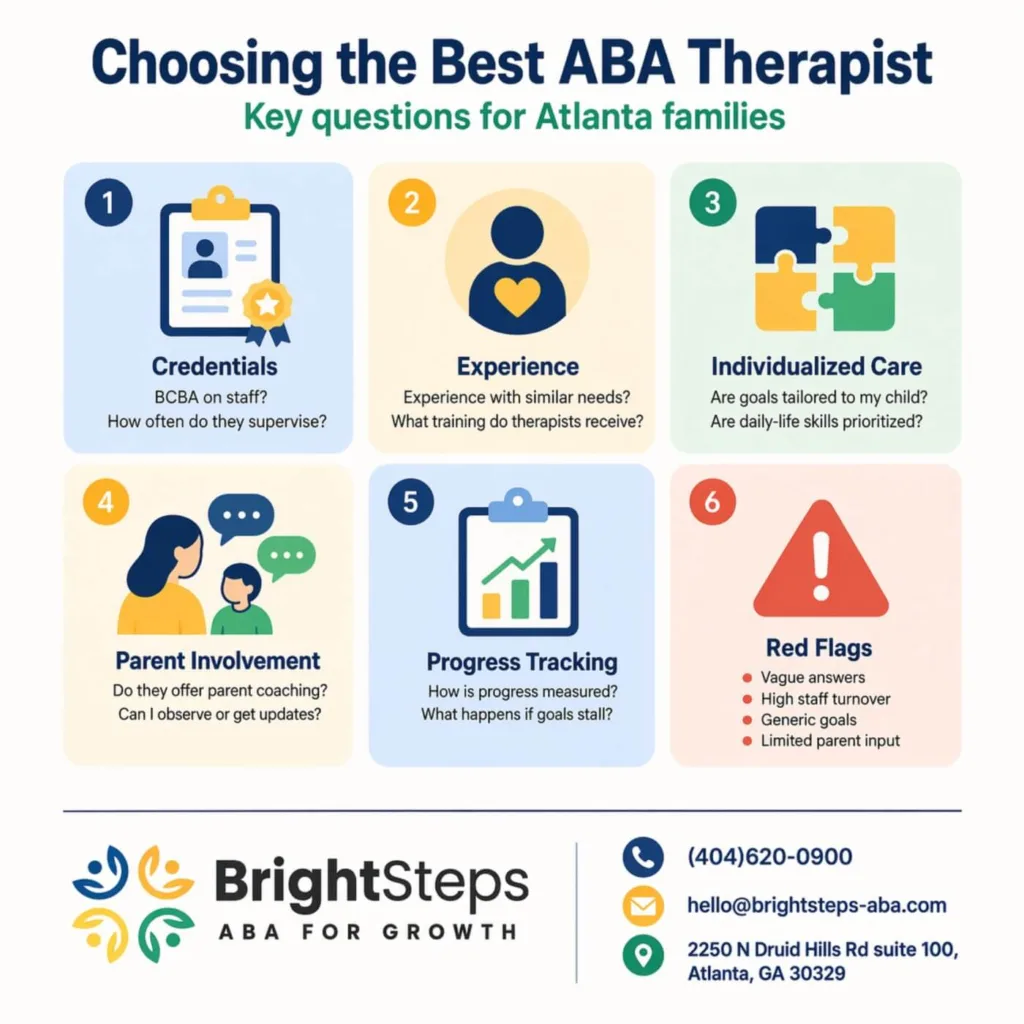
One of the first questions parents should ask is who will be designing and supervising their child’s program. In ABA therapy, the BCBA plays a key role in assessment, treatment planning, supervision, and progress review. If a provider cannot clearly explain who will oversee your child’s care, that is worth paying attention to.
It is also helpful to ask how involved the BCBA will be on an ongoing basis. Some families assume the clinician will be heavily involved throughout the process, only to find that most direct contact happens with a technician and the BCBA appears less often than expected. Asking this early helps you understand the level of clinical oversight your child will actually receive.
How Often Will The BCBA Supervise Sessions?
Supervision matters because therapy plans should not stay static. Children grow, new challenges come up, goals change, and strategies sometimes need adjustment. A strong ABA provider should be able to explain how often the BCBA observes sessions, meets with the therapy team, and reviews your child’s progress.
This question also gives you a sense of how hands-on the provider is. Families should feel comfortable asking whether supervision happens weekly, how it is documented, and how quickly the team responds if something is not working. Frequent and meaningful supervision can make a major difference in the quality of care.
What Training And Experience Do Direct Therapists Have?
For many children, the person spending the most time in sessions will be the direct therapist or behavior technician. That makes it important to ask about their training, support, and experience level. Parents often want to know whether the therapist has worked with children of similar ages, communication levels, or behavior profiles.
This is also a good place to ask about turnover. Consistency can be very important in ABA therapy, especially for children who take time to build trust. If staff changes happen often, progress can feel disrupted and families may feel like they are constantly starting over. A provider should be able to speak honestly about how they support staff and maintain continuity for families.
How Do You Individualize Therapy For Each Child?
A personalized treatment plan should be the standard, not an extra benefit. Ask how the provider learns about your child’s needs, strengths, routines, preferences, and family priorities before creating goals. The answer should go beyond general assessment language and show that the team is focused on your child as an individual.
The best ABA therapy goals are meaningful in everyday life. That may include communication, transitions, play, social skills, daily routines, emotional regulation, safety, or independence at home and school. If goals sound too generic or feel disconnected from your real concerns as a parent, it is fair to ask for more detail.
What Does A Typical Session Look Like?
Many families feel more comfortable when they understand what therapy will actually look like day to day. Asking about a typical session helps parents picture how teaching happens, how breaks are handled, and how the therapist balances structure with connection. It can also tell you whether the provider is focused on building rapport and using motivating, child-friendly strategies.
This question matters because the style of therapy can affect how comfortable your child feels. Some children do best in natural routines and play-based learning. Others benefit from more structure in certain skill areas. A thoughtful provider should be able to explain how they choose methods based on the child rather than forcing every child into the same format.
How Do You Handle Challenging Behavior Or Distress?
This is one of the most important questions a parent can ask. Every child has hard moments. What matters is how the therapy team responds to those moments. Ask how the provider supports children when they are overwhelmed, frustrated, or refusing a task. The answer should reflect patience, safety, dignity, and a focus on understanding what the child is communicating through their behavior.
It is also worth asking how the team prevents problems before they escalate. Good ABA therapy is not only about reacting to behavior. It is about teaching replacement skills, adjusting demands, recognizing triggers, and helping children feel successful. Providers should be comfortable talking through these situations clearly and respectfully.
How Are Parents Included In The Process?
Parent involvement is one of the strongest signs of a family-centered ABA program. Therapy is most effective when caregivers understand the goals, know what strategies are being used, and feel supported in carrying skills into daily life. Ask how parent training is provided, how often coaching happens, and what that support looks like in practice.
The answer should feel practical. Families are often balancing work, school, siblings, and many other responsibilities. A strong provider understands that and offers realistic guidance rather than expecting parents to become full-time therapists at home. Good parent support should build confidence, not pressure.
How Do You Measure Progress?
Progress should never feel vague. Families should know how goals are tracked, how success is defined, and how often updates are shared. Ask whether data is collected during sessions, how it is reviewed, and how the team explains progress in a way that makes sense to parents.
It is equally important to ask what happens if progress slows down. Not every strategy works right away, and not every goal moves at the same pace. A good ABA provider should be able to explain how they reassess goals, update teaching methods, and make decisions when a child needs a different approach. This kind of transparency helps families feel like they are part of the process rather than just waiting for reports.
Will You Coordinate With Other People In My Child’s Life?
Many children receiving ABA therapy also work with speech therapists, occupational therapists, teachers, or school support staff. Asking whether the ABA team collaborates with others can help you understand how connected your child’s care will be. When providers communicate well across settings, goals often feel more functional and consistent.
This is especially important for families in Atlanta who may be balancing school schedules, community programs, and multiple specialists. A provider who values collaboration can help create a more unified plan for your child’s development.
What Setting Is Best For My Child?

Some providers offer in-home therapy, clinic-based therapy, school-based support, or a combination of settings. Families should ask what options are available and how the provider decides what makes the most sense for a child. The best setting depends on the child’s goals, personality, daily routine, and where support is needed most.
For some children, in-home therapy may feel natural and help with daily living routines. For others, a clinic setting may offer more opportunities for structure, peer interaction, or focused skill-building. Asking this question helps families think beyond convenience and toward what will truly support progress.
What Practical Questions Should I Ask Before Starting?
Even if a provider sounds clinically strong, practical details still matter. Families should ask about insurance, scheduling, waitlists, attendance expectations, cancellations, and how quickly services can begin. These details can affect whether therapy feels manageable over time.
It also helps to ask how often schedules change, whether make-up sessions are available, and how communication works if a concern comes up between meetings. Sometimes the day-to-day experience of working with a provider matters just as much as the treatment plan itself.
What Red Flags Should Families Watch For?
Some warning signs become clear in the first conversation. Vague answers about supervision, little emphasis on parent involvement, generic treatment goals, and poor communication are all worth noticing. High staff turnover can also be a concern, especially if the provider cannot explain how continuity is maintained for children and families.
Another red flag is feeling rushed into services without enough discussion about your child’s individual needs. Families should never feel like they have to accept a standard package of care without understanding why those recommendations were made. The best providers welcome thoughtful questions and answer them openly.
Choosing The Best ABA Therapist In Atlanta, GA
Finding the right ABA therapist takes time, but asking the right questions can make the process much clearer. Families in Atlanta have options, which makes it even more important to look beyond marketing language and focus on what daily care will actually feel like. You are not just choosing a provider. You are choosing the people who will help support your child’s communication, confidence, routines, and progress.
At BrightSteps ABA, we understand that families want more than a therapy schedule. They want compassionate guidance, personalized care, and a team that truly listens. We proudly support children and families in Atlanta through individualized ABA therapy, parent and caregiver collaboration, and care designed around each child’s unique needs and goals.
FAQs
What Questions Should I Ask An ABA Therapist?
Ask about BCBA supervision, direct therapist training, individualized goals, parent coaching, progress tracking, therapy setting, and how the provider handles challenging behavior or distress.
How Do I Know If An ABA Therapist Is A Good Fit?
A good fit means the provider communicates clearly, respects your child, personalizes treatment, includes parents in the process, and makes you feel comfortable asking questions.
Should Parents Be Involved In ABA Therapy?
Yes. Parent involvement helps children use new skills outside therapy sessions and gives families support in everyday routines, communication, and behavior challenges.
Is In-Home Or Clinic-Based ABA Better?
It depends on the child’s goals and needs. Some children benefit from learning at home, while others do well in a clinic setting with structure and social opportunities.
What Are Red Flags In ABA Therapy?
Red flags can include vague supervision, poor communication, generic goals, high staff turnover, limited parent training, and pressure to begin services without enough discussion.
How Often Should Progress Be Reviewed In ABA?
Parents should expect regular progress updates, ongoing data collection, and treatment adjustments when goals are not moving as expected.