

Hearing that your child has autism can bring a mix of emotions. For some families, there is relief in finally having answers. For others, it can feel overwhelming, confusing, and hard to know what should happen next. If you are in Atlanta, GA, the good news is that you do not have to figure everything out all at once, and you do not have to do it alone.
An autism diagnosis is not a signal to panic. It is a starting point. It gives you a clearer understanding of your child’s needs and opens the door to support that can help them grow, communicate, build skills, and feel more confident in daily life. The first steps after diagnosis are often about getting organized, understanding your options, and building a plan that fits your child and your family.
Start By Taking A Breath And Getting Organized
One of the most helpful things you can do after an autism diagnosis is slow down and focus on the next step instead of trying to solve everything at once. Families often feel pressure to make quick decisions, schedule multiple services, and fully understand a new world of terminology overnight. In reality, it is okay to move forward one piece at a time.
Start by gathering the documents you have already received. This usually includes the diagnostic evaluation, any recommendations from the provider, referral information, and notes from your child’s pediatrician or specialists. Keep everything in one folder, whether that is printed or digital, so you can easily access it when talking with therapy providers, insurance companies, or schools.
This kind of organization may seem simple, but it can make the process much less stressful. When you are juggling appointments, phone calls, and questions, having everything in one place helps you stay clear and confident.
Understand What The Diagnosis Report Is Telling You
The diagnostic report is one of the most important tools you have right now. It is not just paperwork. It is often the document that helps explain your child’s strengths, challenges, support needs, and recommended services.
Take time to read through it carefully. Some reports are straightforward, while others include more clinical language that can be difficult to process at first. Look for key information about communication, social interaction, sensory needs, behavior, learning style, and daily living skills. You may also see recommendations for services like ABA therapy, speech therapy, occupational therapy, or school-based supports.
If anything feels confusing, bring your questions to your child’s pediatrician or the professional who completed the evaluation. You do not need to understand every line on your own. What matters most is knowing what the report suggests for the next stage of support.
Talk With Your Pediatrician About The Next Steps
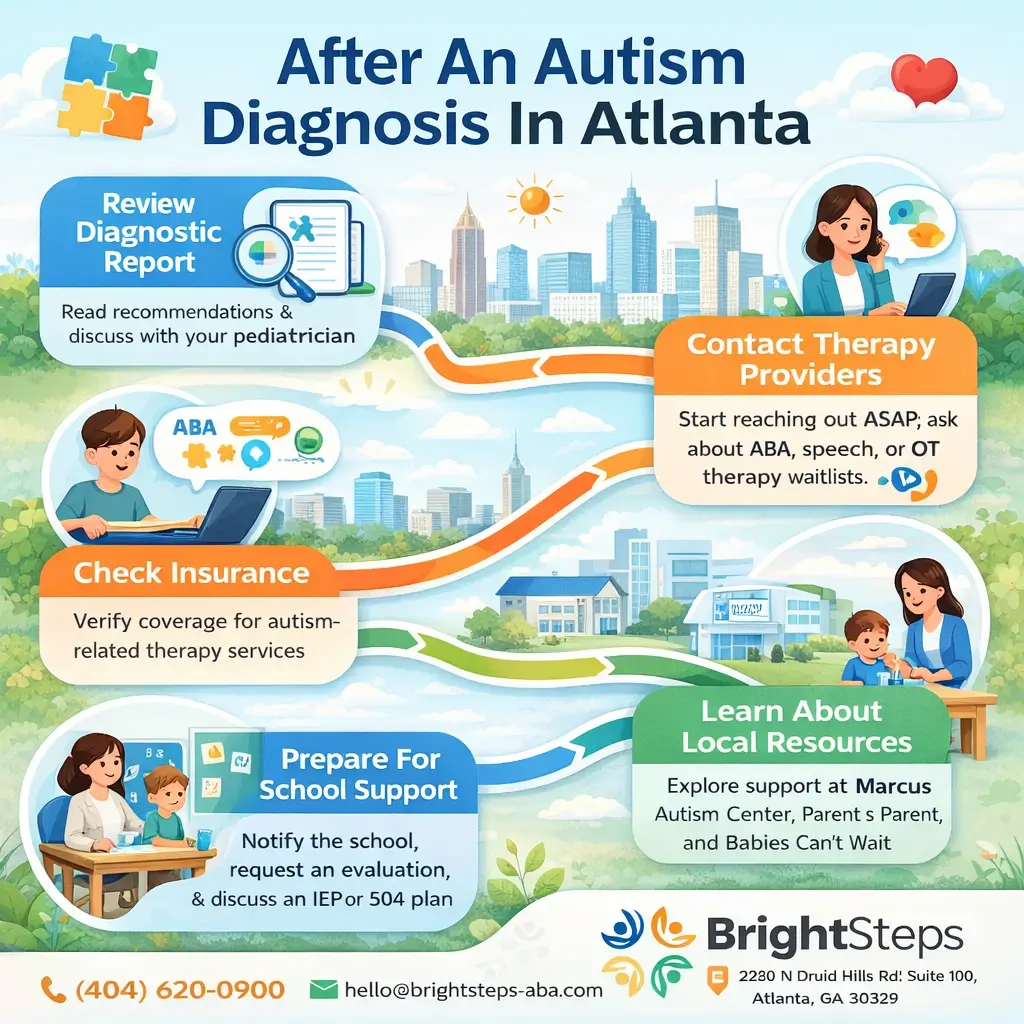
After a diagnosis, your child’s pediatrician can still play an important role. They can help you review the report, discuss referrals, and talk through concerns you may already be seeing at home, such as communication delays, meltdowns, sleep struggles, feeding challenges, or sensory sensitivities.
This is also a good time to ask practical questions. Which services should you prioritize first? Are there any additional medical evaluations you should consider? What should you do if waitlists are long? A pediatrician who knows your child’s history can help you think through those decisions more clearly.
For many families, this conversation brings some structure to what initially feels like too much information at once.
Reach Out For Services Early
One of the biggest mistakes families can make is waiting too long to contact providers because they feel unsure or overwhelmed. In Atlanta, as in many growing metro areas, therapy providers can have waitlists. Reaching out early gives you more options and can help you start the intake process sooner.
That does not mean you need to commit to everything at once. It simply means starting the conversation. Ask about availability, age ranges, intake requirements, insurance, parent involvement, and what their therapy process looks like. Even if you are still deciding what support makes the most sense, gathering information now can help you make better choices later.
Many families begin by exploring a combination of supports depending on the child’s needs. The right mix is different for every child, which is why an individualized approach matters so much.
Learn What Each Type Of Support May Help With
After an autism diagnosis, families often hear a long list of possible therapies. That can feel overwhelming at first, especially if you are new to all of it. It helps to think less about collecting services and more about matching support to your child’s actual needs.
ABA therapy is often recommended when families want help building communication, routines, play skills, behavior support, and daily living skills. It can also include parent training, which helps caregivers use consistent strategies at home.
Speech therapy may be recommended when a child has delayed language, limited functional communication, or challenges with social communication. For some children, this support is essential early on.
Occupational therapy may be suggested for sensory processing differences, fine motor delays, transitions, regulation, or self-help skills like dressing and feeding.
Not every child needs every service. The goal is not to overbook your week. The goal is to create a plan that supports your child in meaningful and manageable ways.
Know The Difference Between Early Intervention And School Support
Your child’s age can shape what steps come next. If your child is under 3, early intervention services may be one of the first places to start. These services are often focused on developmental support during the earliest years, when families are building a foundation for communication, learning, and everyday routines.
If your child is 3 or older, the school system may become a more important part of the conversation. Families are often surprised to learn that a medical diagnosis and school eligibility are not exactly the same thing. A child can have a medical autism diagnosis, but schools still go through their own process to determine what support is appropriate in the educational setting.
That is why it helps to contact your local school district early if you have concerns about preschool readiness, classroom support, learning, communication, or behavior in group settings. Asking questions sooner can make the transition smoother and help you better understand your options.
Start Thinking About School Support In A Practical Way
For many parents, school is one of the biggest worries after diagnosis. You may be wondering whether your child will need accommodations, whether they can succeed in a traditional classroom, or how to advocate for the right support.
The best place to begin is with communication. If your child is in preschool or approaching school age, share the diagnosis and evaluation information with the people who will be involved in planning support. Ask what evaluation process the school uses, what services may be available, and how they determine eligibility.
This is also a good time to begin thinking about your child’s day from their perspective. What transitions are hardest? What helps them feel calm? How do they communicate needs best? What routines work well at home? These details matter because they often help shape better support at school too.
Take Time To Understand Insurance And Costs
Insurance is one of the most stressful parts of the process for many families. Even when services are recommended, coverage can vary depending on the plan, network, provider requirements, and authorization process. That is why it is important to start verifying coverage early.
Call your insurance company and ask specific questions about autism-related services. Ask whether ABA therapy, speech therapy, and occupational therapy are covered. Ask whether referrals or prior authorizations are required. Ask whether out-of-network services are covered at all. Write down the answers and keep a record of who you spoke with.
If your child has Medicaid or another state-supported plan, ask what autism-related assessments and treatments may be available. Even when coverage exists, there may still be steps you need to complete before services begin. The more clearly you understand the process, the easier it becomes to move forward with fewer surprises.
Focus On What You Can Do At Home Right Now
While you are arranging services, there is still a lot you can do at home to support your child in a positive way. One of the most helpful things is creating predictable routines. Many autistic children benefit from knowing what comes next, and a more structured day can reduce stress for both the child and the family.
Keep communication clear and simple. Use consistent words for important routines, transitions, and expectations. Pay attention to what helps your child stay calm, what triggers distress, and what seems to motivate them. Those observations can be valuable later when talking with therapists or teachers.
It also helps to celebrate small wins. A new word, a smoother transition, a better response to a routine, or a moment of connection all matter. Progress often builds in small steps, and noticing those steps can shift your mindset from fear to forward movement.
Build A Support System For Yourself Too
Parents often put all of their focus on the child, but your support matters too. After an autism diagnosis, many families benefit from talking with other parents who understand the process. That might be through local support groups, community organizations, or informal parent networks in Atlanta.
Sometimes the most helpful thing is hearing that other families also felt overwhelmed at first. Sometimes it is getting practical advice about schools, evaluations, or waitlists. Sometimes it is simply having a space where you do not have to explain why this season feels heavy.
Support does not have to look perfect or formal. It just needs to help you feel less alone while you are adjusting to this new chapter.
Choose Providers Who See Your Child As An Individual
As you explore services, pay attention to how providers talk about your child and your family. Good support should feel collaborative, respectful, and individualized. It should not feel like your child is being pushed into a one-size-fits-all program.
Ask how goals are set. Ask how progress is tracked. Ask how parents are included. Ask how the provider adapts support based on communication style, strengths, needs, and family routines. The answers can tell you a lot about whether the fit is right.
At BrightSteps ABA, we understand that families in Atlanta often come to this stage with a mix of hope, stress, and unanswered questions. That is why our approach is centered on compassionate, individualized, BCBA-led care that meets children where they are and works closely with parents throughout the process. We believe support should feel practical, encouraging, and tailored to real family life.
Give Yourself Permission To Take This One Step At A Time
An autism diagnosis can change the way you think about your child’s future, but it does not take away your child’s potential. It does not erase their personality, their strengths, or the joy they bring into your family. What it does is give you more information so you can respond with the right support.
You do not need to have every answer this week. You do not need to build the perfect plan overnight. What matters most is starting. Read the report. Ask questions. Contact providers. Explore support. Keep learning your child. That steady, thoughtful approach can make a big difference over time.
In Atlanta, there are real resources, experienced professionals, and family-centered services available to help you move forward. The next chapter may feel new, but you do not have to walk into it without direction.
FAQ
What Should I Do First After My Child Is Diagnosed With Autism In Atlanta, GA?
Start by reviewing the diagnostic report carefully and talking with your child’s pediatrician about the recommendations. From there, begin contacting therapy providers, checking insurance coverage, and organizing your paperwork so you can move through the next steps with more clarity.
Where Can I Find Autism Services In Atlanta, GA?
Atlanta families can explore support through local ABA providers, speech therapy clinics, occupational therapy providers, pediatric specialists, and school-based services. It is often helpful to begin with providers that serve your child’s age group and needs, then ask about availability, intake requirements, and insurance.
Does My Child Need ABA Therapy Right Away?
Not every child needs the same support right away. ABA therapy may be helpful for building communication, daily routines, behavior support, play skills, and independence, but the right timing and approach depend on your child’s individual needs and your family’s priorities.
Is ABA Therapy Covered By Insurance In Georgia?
Coverage can vary depending on your insurance plan, provider network, and authorization requirements. Many families need to verify whether autism-related services such as ABA, speech therapy, or occupational therapy are covered under their specific plan before starting care.
What Is The Difference Between A Medical Autism Diagnosis And School Support?
A medical diagnosis helps identify your child’s developmental needs and can guide treatment recommendations. School support is handled separately, and the school may complete its own evaluation process to determine eligibility for services or accommodations in the educational setting.
How Do I Request School Support For My Child In Atlanta?
You can start by contacting your child’s school or district and sharing your concerns in writing. Ask about the evaluation process, what documents they need, and what supports may be available if your child is having challenges with communication, learning, behavior, or classroom routines.
What Services Are Commonly Recommended After An Autism Diagnosis?
Common recommendations may include ABA therapy, speech therapy, occupational therapy, and school-based supports. Some children may need one service, while others benefit from a combination depending on communication, sensory, social, or behavioral needs.
What Can I Do At Home While Waiting For Services To Start?
Focus on building predictable routines, using clear and simple communication, observing what helps your child feel calm, and celebrating small progress. Keeping notes about behaviors, strengths, triggers, and daily patterns can also be helpful when services begin.
How Long Does It Take To Start Autism Services After Diagnosis?
That depends on provider availability, insurance approvals, and the type of support your child needs. Some families are able to begin quickly, while others may face waitlists, which is why it helps to contact providers as early as possible after diagnosis.
How Can BrightSteps ABA Help Families In Atlanta?
BrightSteps ABA provides compassionate, individualized, BCBA-led support for children and families in Atlanta. Our approach focuses on meaningful skill-building, parent partnership, and care that fits real family life, so parents feel supported at every stage after diagnosis.