
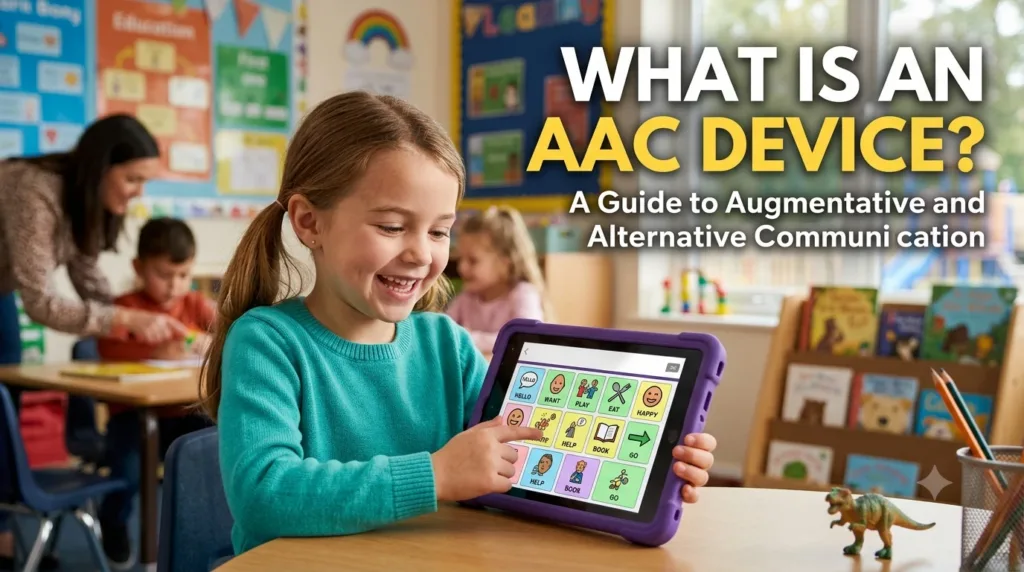
ACC is used for Augmentative and Alternative Communication. Here, “augmentative” refers to adding to a person’s existing speech, and “alternative” means using other methods when speech is not available. An AAC device can be any device, system, or technology that enables a person to communicate when they are unable to do so through their voice. There are a variety of tools available, such as:
Low Tech Systems: A simple printed picture board, a binder of symbols that can be taken out and attached with adhesive, such as the Picture Exchange Communication System (PECS), or pointing books.
High-Tech Devices: Specialized computers/special digital tablets with voice-generating software. The machine reads out a picture, icon or word that the user taps or types when he or she taps or types it.
For an autistic person, these devices make abstract, personal thoughts into very identifiable symbols or sounds for everyone else.
Famous Voices: Holly Robinson Peete Shares How AAC Devices Give Kids a Voice
Hollywood star and autism advocate Holly Robinson Peete has been a strong and vocal supporter of the autism community since the diagnosis of her son, Rodney Jr. She regularly shares the importance of giving children the appropriate communication instruments at an early age.
As an advocate, founder, and public speaker, Holly reminds children that when traditional speech is not an option, an AAC device is a powerful equalizer. She said these tools are designed to open up children’s worlds, give them a voice, unlock their personality, and not only will they help children request a snack, but when they need a voice, they will have one.
AAC Myths and Misconceptions
These tools can be very helpful, but several common misconceptions prevent families from using them. Let’s see the misconceptions and examine the truth.
Myth 1: Using an AAC device will stop my child from ever learning to speak.
Reality: This is the number-one fear among parents, yet years of speech-language research have found the opposite. A child is not lazy if they use an AAC device. Rather, it reduces anxiety about forming words, thereby increasing overall communication. The device’s visual symbol and the speaker’s verbal cue create a unified language model that can naturally complement and enhance spoken language.
Myth 2: A child has to be a certain age or show advanced intelligence before using one.
Reality: Communication has no specific age range. Basic visual tools can be used by toddlers just as they are used by older children. The software uses two large pictures on the screen, eliminating the need for a child to learn to read and write to begin communicating his/her current choices and feelings.
Myth 3: Introducing AAC means we are officially giving up on spoken language.
Reality: It isn’t a sign of giving up on spoken language to select a communication device. It’s just about providing your child with something he or she can use now without frustration, because they still need to practice verbal communication through therapy.
How to Implement an AAC?
Implementing a new communication system with an autistic child requires patience, teamwork, and ultimately a routine that is supportive.
Consult a Speech-Language Pathologist (SLP): The first step to start is to consult an SLP. They can assess your child’s ability to use a picture board, a low-tech option compared to a high-tech tablet with specialized picture board software.
Model the System Consistently: Your child will not learn to use the model automatically. You have to “speak” the language as well. Saying the word “eat” will cause them to tap on the “eat” icon on their screen. Aided language stimulation: provides a step-by-step demonstration of how the tool functions in use.
Keep it Accessible: It should not be placed away in a backpack or on a high shelf in the closet. Treat it as if it’s their physical voice! It must be charged, plugged in, and within easy reach when they are eating at supper, sitting in the park, or in school.
Why AAC is so Beneficial?
Providing a non-speaking or minimally verbal child with a reliable means of communication can bring about enormous changes in their life.
First of all, it significantly decreases challenging behavior. Some of the most frequent meltdowns are simply a result of frustration: a child wants to let you know how sick their tummy is or how loud the lights are, but can’t find the words. The anxiety and bad behaviors are replaced with a clear functional button on an AAC device.
Secondly, it promotes tremendous independence and social connection. It lets kids have a clear word, make sense of what is asked of them at school, ask questions, share jokes with fellow students, and get to know others.
Help Your Child Communicate with Help from Hopebridge
It can be very challenging for a family to navigate the transition to alternative communication, but you don’t have to go it alone. Autism Therapy Centers focus on providing compassionate, comprehensive care with a range of therapies in one location. Their experienced staff can assess, identify, and integrate the best communication devices for your child’s lifestyle through Speech Therapy and Applied Behavior Analysis (ABA) therapy. When you’re ready to help your child discover their voice and create a brighter future, contact trusted ABA therapy centers to discover how they can provide personalized therapy options for your child. See some inspiring family journeys about how an AAC device changed a child’s life and explore how these communication tools are changing everyday life.