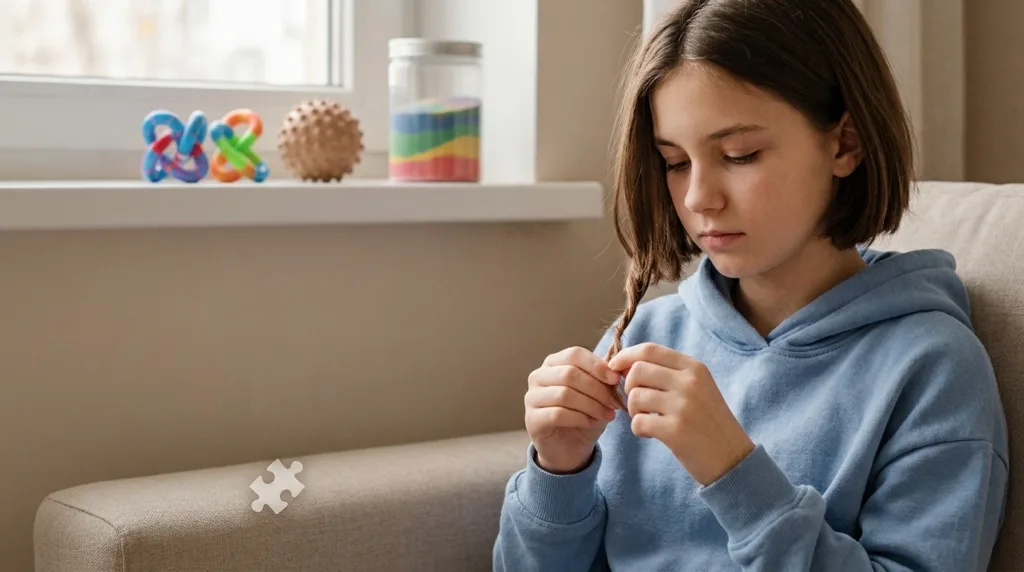
In autistic children and adults, hair pulling can sometimes be observed. The individual may pull, twist, and touch their own hair without realizing how often they do this. The experience can persist for some time, or it can be a recurring issue that leads to discomfort and hair loss.
Different situations are associated with skin picking and hair pulling in autism. It can be related to sensory seeking, stress, boredom, and challenges with emotion regulation. Knowing which factors may be responsible can help parents, caregivers, and professionals respond calmly and supportively.
What Does Hair Pulling Look Like?
There are different ways of hair pulling. They can remove one or two strands at a time, twist their hair around their fingers, or pull repeatedly from the same spot.
Some people may do this when they are sitting still, such as while watching TV, studying, or trying to sleep. Some people may pull at their hair in stressful, frustrating, and excited situations.
But not all behavior is related to autism. Information about the location and time of occurrence can be helpful.
Why Does Hair Pulling Happen in Autism?
Hair pulling and autism can happen in different ways. Each autistic person is unique, and the cause of their behavior is as well.
Sensory Seeking
Alongside hyperphagia in autism, many autistic individuals also seek out other sensory experiences. The feeling of hair covering the body can feel interesting or calming when touched, twisted, or pulled.
If you’re one of those who likes repetitive sensations, then hair is always available and easy to reach. This may lead to hair pulling being repeated over time.
Stress and Anxiety
Hair pulling may increase when a person feels nervous, overwhelmed, or frustrated. Sometimes, repetitive actions can be a way to cope with difficult feelings.
Stress may increase with changes in routine, new surroundings, social settings, or sensory overload, and hair pulling may become more noticeable.
A lack of activity and boredom
Sometimes, hair pulling also occurs when there is no activity. It can become a habit to keep one’s hands busy, particularly when seated for prolonged periods.
For example, a child might pull their hair at the movies or while waiting for an activity to start.
Difficulty Communicating Needs
Individuals with Autism Spectrum Disorder may not be able to communicate their feelings or physical pain. They might demonstrate stress, fatigue, or overload through repetitive behaviors rather than words.
This is why it is helpful to consider what occurs in the lead-up to hair pulling rather than the act of pulling hair itself.
Can Hair Pulling Cause Problems?
Occasional hair pulling may not be harmful. But continued pulling can cause physical issues.
These may include:
- Hair thinning
- Small bald patches
- Scalp soreness
- Skin irritation
- Broken hair
- Damage to hair follicles.
If the individual is pulling on their hair a lot or injuring their scalp, it may be a good idea to consult a healthcare professional. It may also be stressful for the person or family if it’s hard to control and may be seen as hair loss.
Look for Patterns and Triggers
A helpful technique for addressing autism & hair pulling is to observe what occurs in the lead-up to, during, and after the behavior.
Parents/carers may ask:
- What time are people most likely to pull their hair?
- Do they feel tired/bored?
- Are there any loud noises or is it crowded?
- Has there been a change in the routine?
- Does the behavior occur when doing challenging tasks?
- Does the person appear to be more relaxed afterward?
Simple notes can be helpful to recognize patterns. If a potential trigger is identified, it becomes easier for families to consider how they can make that situation easier.
Provide Safe Alternatives
You can try to provide an alternative activity.
Possible alternatives include:
- Fidget toys
- Stress balls
- Soft textured objects
- Drawing or coloring
- Building activities
- Play dough
- Activities the child enjoys by looking, listening, smelling, tasting, or feeling
It is up to the individual which plan is best. What is an enjoyable activity to one person may not be to another. The intention is not for the person to cease totally at once. Rather, it’s about creating a safer and more appropriate method to fulfill the identical requirement.
Make Daily Routines More Predictable
Other strategies that may be effective include predictable routines if stress or unexpected changes seem to set the stage for hair pulling.
Parents can help their children adjust to change by providing advance information about what is to come. Visual schedules, verbal cues, or advance warning may help with transitions. If noise, crowd, or other sensory experiences are related to the behavior, a more relaxed setting can also help.
Respond With Patience
Shouting, teasing, or making someone feel bad for something they did is not a good idea. The reactions may be stressful and can make this behavior more difficult to manage.
However, do not use a loud tone; if appropriate, gently redirect the person using calm language to another activity.
Introducing a healthier coping method, keeping their hands occupied in a different manner, and providing positive attention can also be helpful.
Final Thoughts
There are a variety of factors that may lead to autism and hair pulling. It can be linked to sensory issues, stress, boredom, changes in routine, and an inability to express emotions.
Rather than just telling someone to stop, it’s better to try to figure out why they do it. These steps can all have a significant impact. Being vigilant for triggers, offering alternatives, establishing consistent schedules, and being patient can make a big difference.
First and foremost, each autistic person is unique. The emphasis of support should be on safety, comfort, and the development of healthy ways to meet sensory and emotional needs.