

Starting ABA therapy can bring up a lot of questions for parents. You may have heard terms like structured teaching, behavior plans, or skill-building, but still wonder what a real session actually looks like from start to finish.
The good news is that ABA therapy is not one fixed routine that looks the same for every child. A quality ABA session is individualized, supportive, and built around your child’s needs, strengths, and goals. Some parts may look like play, some may look like practice, and some may happen during everyday routines. Together, those moments help children build skills that can support communication, independence, confidence, and daily life.
ABA Sessions Are Built Around Your Child’s Individual Goals
No two ABA therapy sessions are exactly alike. Each child has different strengths, challenges, preferences, and learning styles, so the session is shaped around what will be most meaningful and effective for them.
For one child, a session may focus heavily on communication, such as asking for help, making choices, or using words more consistently. For another, the focus may be on social interaction, emotional regulation, or learning daily routines like washing hands or cleaning up toys. Some children may need support with transitions, following directions, or reducing behaviors that interfere with learning and family life.
This is one of the biggest things parents should know going in. ABA is not about making every child follow the same script. It is about understanding the child in front of you and building a plan that supports real progress in the areas that matter most.
Who Is Usually In The Session?
ABA sessions often involve more than one person, even if only one therapist is working directly with the child at a time.
In many cases, the child works one-on-one with a Registered Behavior Technician, or RBT, who carries out the treatment plan during sessions. A Board Certified Behavior Analyst, or BCBA, oversees the program, sets goals, reviews progress, and makes adjustments as needed. Parents and caregivers also play an important role by sharing updates, asking questions, and helping carry strategies into everyday life.
That team approach matters because real progress usually happens when everyone is working toward the same goals. Parents are not expected to do everything on their own, but they are an important part of helping skills carry over beyond therapy time.
What A Typical ABA Therapy Session May Look Like
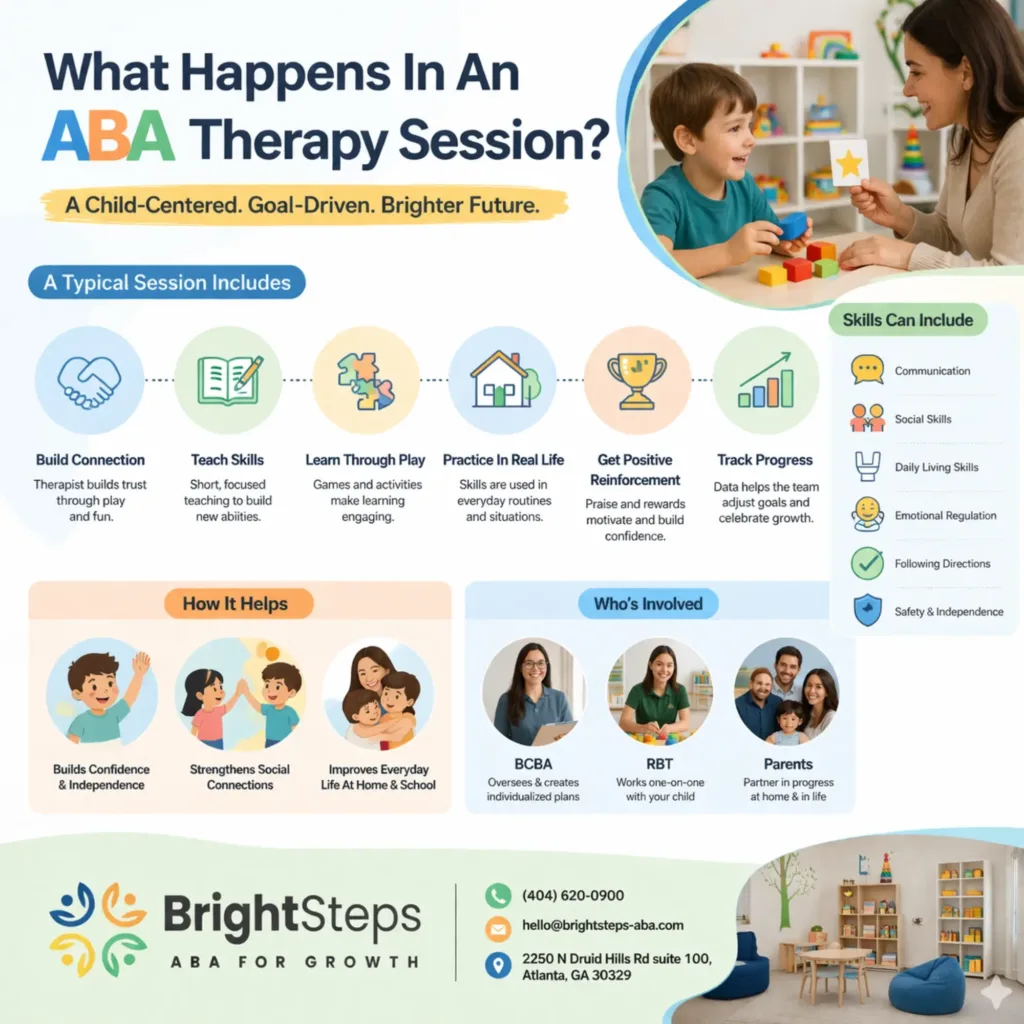
While every plan is individualized, most ABA sessions follow a general rhythm. The therapist is not simply showing up with a worksheet or running through a rigid checklist. Instead, the session is usually a balance of relationship-building, teaching, reinforcement, breaks, and practice in real situations.
Pairing And Rapport Building
Especially in the beginning, a therapist may spend time building trust and connection before asking the child to do much at all. This is often called pairing. It means the therapist is learning what the child enjoys and making the therapy environment feel positive and safe.
That may involve playing with favorite toys, joining in preferred activities, singing songs, doing movement games, or simply following the child’s lead. To a parent, it may look like the therapist is “just playing,” but that time is important. Without rapport, it is much harder to teach new skills effectively.
Structured Teaching Moments
Once the therapist has the child’s attention and motivation, there may be short, focused teaching moments built into the session. These are often used to work on specific goals in a clear, repeatable way.
For example, the child may practice identifying objects, following simple instructions, matching items, asking for a turn, or responding to a question. These teaching moments are usually brief and are adjusted based on the child’s age, ability, and tolerance. A strong ABA session does not feel like nonstop pressure. It uses structure when structure helps, then shifts when the child needs something different.
Play-Based Learning
Many ABA sessions include a lot of play, especially for younger children. That is because play is often the best way to teach communication, social interaction, flexibility, and engagement.
A therapist may use turn-taking games to work on waiting and sharing. Pretend play may help with language and social understanding. Puzzles, crafts, movement activities, and sensory-friendly games can all become opportunities for learning. Play also helps keep the child motivated, which is a major part of effective therapy.
Learning In Everyday Routines
Not every skill is taught sitting at a table. A strong ABA program also uses daily routines to teach practical skills in natural ways.
A child may practice asking for a snack, putting on shoes, transitioning between activities, cleaning up after play, washing hands, or sitting for a meal. These moments matter because they connect therapy to everyday life. The goal is not only for a child to succeed during therapy, but also to use those skills at home, in school, and in the community.
Breaks, Reinforcement, And Motivation
ABA sessions are not meant to be constant demands without support. Children need breaks, encouragement, and reasons to stay engaged.
Therapists often use positive reinforcement to strengthen new skills and encourage participation. That may include praise, access to a favorite toy, a preferred activity, a short movement break, or another motivator that is meaningful to the child. Reinforcement is not about bribing a child. It is about helping learning feel worthwhile and building momentum through success.
What Skills Might Be Worked On During A Session?
ABA therapy can target many different types of skills depending on the child’s needs. The focus is usually on helping the child function more comfortably and successfully in daily life.
Communication is a common area of focus. A child may work on requesting items, answering questions, labeling objects, using gestures, expanding sentences, or finding alternative ways to express wants and needs.
Social skills may also be part of the session. That can include taking turns, making eye contact when appropriate for the child, engaging in shared play, greeting others, or responding to peers.
Daily living skills are another important area. A session may include tasks like toileting routines, dressing, brushing teeth, washing hands, sitting at the table, or following steps in a familiar routine.
Some sessions also focus on emotional and behavioral skills. This might include tolerating transitions, waiting, coping with frustration, reducing unsafe behaviors, or learning a replacement skill such as asking for a break instead of becoming overwhelmed.
How Challenging Behaviors Are Addressed
One of the most misunderstood parts of ABA therapy is how it handles challenging behaviors. Good ABA is not just about stopping behaviors or making a child comply. It is about understanding what the behavior is communicating and teaching safer, more functional alternatives.
If a child screams during transitions, the therapist may look at what makes transitions hard. Is the child confused about what is next? Are they having trouble ending a preferred activity? Do they need more support communicating frustration? Once the therapist understands the pattern, they can teach replacement skills and adjust the environment to reduce stress.
That may include using visual supports, giving warnings before transitions, breaking tasks into smaller steps, teaching the child to ask for help, or reinforcing calm responses. The goal is to build skills, not simply react to behavior after it happens.
What The First Few Sessions Often Look Like
Parents are often anxious about the beginning of therapy because they are not sure how quickly things will move. In many cases, the first few sessions are less about pushing demands and more about observation, relationship-building, and getting to know the child.
The therapist may be paying close attention to what motivates the child, how they communicate, what activities they enjoy, and what situations seem difficult. This helps shape future sessions in a way that is more personalized and productive.
So if the first sessions seem lighter or more play-focused, that does not mean therapy is not working. It often means the therapist is laying the groundwork for better learning and more meaningful progress.
How Progress Is Measured
ABA therapy is not based on guessing. Progress is tracked so the therapy team can see what is improving, what needs more support, and when goals should be adjusted.
During sessions, therapists often collect data on specific targets. That might include how often a child requests help, how independently they complete a routine, how long they can stay engaged, or how frequently a challenging behavior occurs. Over time, that information helps the team make informed decisions.
This is important for families because it keeps therapy focused and accountable. Rather than relying only on general impressions, the team can look at patterns and make changes based on real progress.
What Good ABA Therapy Should Feel Like
Parents do not need to know every clinical term to recognize when therapy feels supportive and respectful. A good ABA session should not feel cold, robotic, or disconnected from the child.
It should feel engaging, individualized, and responsive. The therapist should notice when the child needs a break, when an activity is too hard, or when a different approach would work better. There should be moments of joy, connection, and success built into the process.
Families should also feel included. Parents should be able to ask questions, understand the goals, and feel like their input matters. Therapy works best when it supports the whole family, not just the child during a scheduled session.
In-Home Vs Clinic-Based Sessions
ABA therapy can happen in different settings, and each setting can offer different benefits depending on the child’s needs.
In-home sessions can be especially helpful for working on daily routines, family participation, and skills that need to happen in the child’s natural environment. That may include mealtime routines, toileting, bedtime transitions, play with siblings, or following directions in the home.
Clinic-based sessions can provide a more structured setting with access to materials, planned social opportunities, and fewer distractions in some cases. They may also help children practice skills in a setting designed specifically for learning and interaction.
Neither setting is automatically better for every child. The best choice depends on goals, family preferences, and where the child is most likely to make meaningful progress.
How Parents Can Support Progress Outside Of Session
Parents do not need to become therapists, but small carryover at home can make a big difference. When families and therapy teams stay connected, children often have more opportunities to use new skills across the day.
That may mean using the same language the therapist is using, practicing a simple routine, reinforcing communication attempts, or sharing updates about what is going well and what is still difficult. Even small moments of consistency can help a child generalize skills beyond the therapy session.
The key is not perfection. It is collaboration. Therapy should support family life, not make it feel more overwhelming.
Why Choose Brightsteps ABA
At Brightsteps ABA, therapy is built around the child and the family, not a one-size-fits-all formula. We provide compassionate, individualised ABA services designed to help children build meaningful skills in communication, behaviour, social interaction, and everyday routines. With a warm, family-centered approach, our team works closely with parents and caregivers to create support that feels practical, respectful, and connected to real life.
Final Thoughts
An ABA therapy session can include many different parts, but the heart of it is simple. It is about helping a child build useful skills in a way that is individualized, supportive, and meaningful.
Some sessions may include structured teaching. Others may look more like play, daily routines, or practice during transitions. Over time, those moments work together to support growth in communication, independence, emotional regulation, and daily life.
For parents, understanding what happens in a session can make the process feel much less intimidating. The best ABA therapy should not feel like a mystery. It should feel like a thoughtful partnership focused on helping your child thrive.
FAQs
What Actually Happens In ABA Therapy?
ABA therapy usually includes a mix of play-based learning, structured teaching, daily routine practice, and positive reinforcement. Sessions are tailored to the child’s goals and may focus on communication, social skills, behavior support, and independence.
What Does A First ABA Therapy Session Look Like?
The first ABA sessions often focus on building rapport, learning what motivates the child, observing behavior, and starting to introduce simple goals. The therapist may spend a lot of time playing and connecting before increasing demands.
Are ABA Therapy Sessions Play-Based?
Many ABA sessions are play-based, especially for younger children. Therapists often use games, toys, movement, and everyday activities to teach skills in a natural and engaging way.
How Long Is An ABA Therapy Session?
Session length can vary based on the child’s treatment plan, age, needs, and setting. Some sessions are shorter, while others may last several hours with breaks and different activities built in.
Do Parents Stay In The Room During ABA Therapy?
Sometimes parents stay nearby or participate directly, especially during in-home sessions or caregiver training. In other cases, the therapist may work one-on-one with the child while still keeping parents updated and involved.
What Skills Are Worked On During ABA Sessions?
Common skill areas include communication, play, social interaction, transitions, toileting, dressing, following directions, coping skills, and reducing behaviors that interfere with learning or daily life.
What Is The Difference Between In-Home And Clinic-Based ABA?
In-home ABA helps children practice skills in their everyday environment, while clinic-based ABA may offer more structure and access to planned learning opportunities. The right setting depends on the child’s goals and needs.
How Is Progress Measured In ABA Therapy?
Therapists collect data during sessions to track specific goals, such as communication attempts, independence with routines, or changes in behavior. That information helps guide the treatment plan and measure progress over time.