
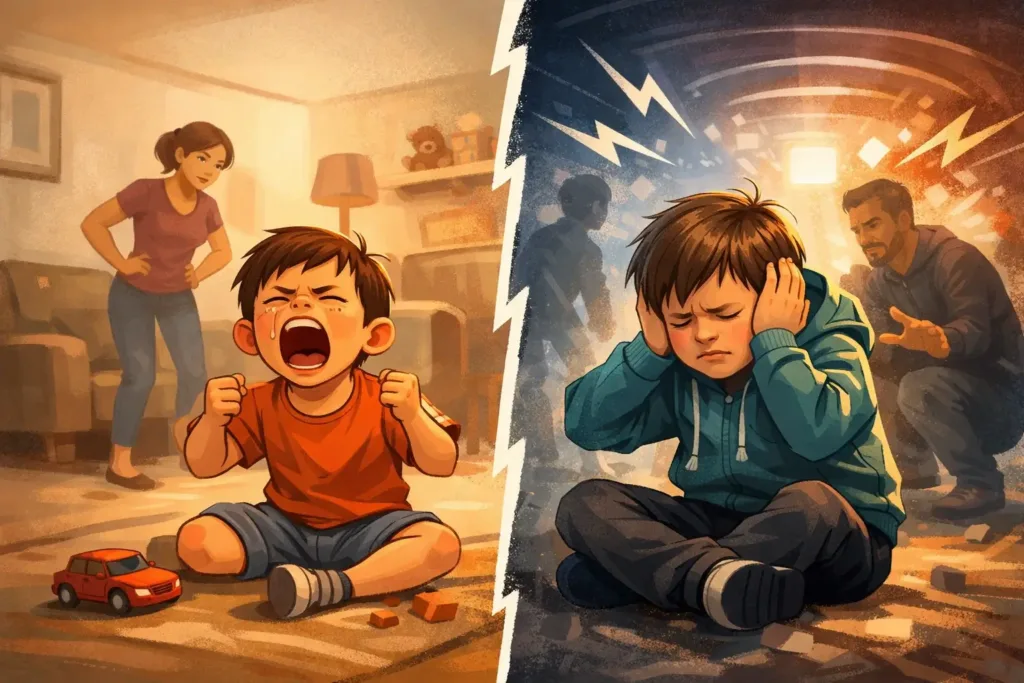
When a child is crying, yelling, dropping to the floor, or struggling to regain control, it can be hard to tell what is really happening in the moment. From the outside, a tantrum and an autism meltdown can look similar. Both can feel intense. Both can leave parents feeling overwhelmed. But the reason behind the behaviour is often very different, and that matters.
Understanding the difference can help parents respond in a calmer, more supportive way. A tantrum is usually connected to frustration, limits, or wanting something. An autism meltdown is typically a response to overload. That overload may be sensory, emotional, social, or communication-related. When families know what they are seeing, they are better able to meet the child’s needs instead of reacting only to the behaviour.
Why This Difference Matters
It is easy to misread a meltdown as defiance or assume every difficult moment is the same. That can lead to responses that make things worse. A child in a tantrum may need consistent boundaries and calm guidance. A child in a meltdown may need reduced demands, a quieter environment, and time to recover.
This distinction also helps parents notice patterns. If a child regularly becomes overwhelmed in noisy places, during transitions, or after a long day, that points to something different than a brief outburst over being told no. Looking beyond the behaviour helps families respond with more clarity and less guesswork.
What Is A Tantrum?
A tantrum is a behavioural response that often happens when a child feels frustrated, disappointed, or upset about not getting what they want. Young children may tantrum because they do not yet have the language, patience, or coping skills to manage strong emotions.
A tantrum often has a goal behind it. A child may want a toy, a snack, more screen time, or a different outcome. They may be protesting a limit or trying to avoid something they do not want to do. In many cases, the behaviour decreases when the child gets what they want or realizes the behaviour is not changing the situation.
That does not mean tantrums are fake or unimportant. The feelings are still real. But the child often has at least some ability to shift if the situation changes.
What Is An Autism Meltdown?
An autism meltdown is different. It is not a strategy, and it is not a child trying to get their way. A meltdown is usually an involuntary response to overwhelm. The child’s nervous system is overloaded, and they lose the ability to cope in that moment.
That overload can build from many things. It may come from loud sounds, bright lights, uncomfortable clothing, changes in routine, communication frustration, social demands, fatigue, hunger, or too many demands at once. Sometimes the trigger is clear. Other times, it is the result of many stressors piling up over time.
During a meltdown, a child may cry, scream, cover their ears, run away, hit, drop to the floor, or become unable to respond. Some children become very active, while others shut down completely. The key difference is that the child is not choosing the reaction in the same way they might during a tantrum. They are overwhelmed and unable to regulate.
The Biggest Differences Between Tantrums And Autism Meltdowns
One of the clearest differences is the reason behind the behaviour. Tantrums are often linked to wanting something or resisting something. Meltdowns are usually linked to overload.
Another difference is control. During a tantrum, a child may still have some awareness of what is happening around them. They may pause, look for a response, or stop when the outcome changes. During a meltdown, the child is often no longer able to use those same self-regulation skills. The reaction has taken over.
The ending can look different too. A tantrum may stop fairly quickly once the child gets what they want, calms down, or sees the behaviour is not working. A meltdown often has to run its course. Even if the trigger is removed, the child may still need time to recover because their body is still in a heightened state.
The aftermath also matters. After a tantrum, a child may return to normal relatively quickly. After a meltdown, a child may seem exhausted, emotional, withdrawn, or fragile for some time afterward.
Why Meltdowns Are Often Confused With Tantrums
Many parents struggle with this distinction because the outward behaviours can overlap. A child may cry, yell, throw themselves down, or push things away in both situations. If you only look at the visible behaviour, it is easy to assume the cause is the same.
The bigger clues often come from what happened before and after. Did the child become increasingly overwhelmed in a busy environment? Were they already tired, stressed, or dysregulated? Did the situation escalate even after the original issue was addressed? Did they seem spent afterward?
These questions can reveal much more than the behaviour alone. The same action can come from two very different experiences.
Signs It May Be A Meltdown Instead Of A Tantrum
Many children show signs of distress before a full meltdown happens. Parents may notice more repetitive behaviour, covering ears, pacing, crying more easily, refusing demands, hiding, or becoming unusually rigid. Some children become quieter. Others become more physically restless.
In the moment, a meltdown may look intense and disorganized. The child may not be able to respond to instructions, answer questions, or use words the way they normally do. They may not be focused on getting something. Instead, they may be trying to escape the overload or survive the moment.
Another common clue is what happens when the demand or conflict is removed. If the child remains overwhelmed, cannot calm quickly, and needs significant recovery time, that points more toward meltdown than tantrum.
Can An Autistic Child Have Both?
Yes. An autistic child can have both tantrums and meltdowns. This is important because not every difficult behaviour in an autistic child is automatically a meltdown. Children with autism are still children. They can be frustrated, disappointed, tired, and upset just like any other child.
At the same time, autistic children may be more vulnerable to overload because of sensory differences, communication challenges, and difficulty with transitions or unexpected change. That means meltdowns may happen more often in certain settings or under certain conditions.
The goal is not to label every incident perfectly. The goal is to understand the likely cause so the response is helpful.
How To Respond To A Tantrum
When a child is having a tantrum, staying calm matters. Adults do not need to match the child’s emotion. Clear, steady limits are usually more helpful than long explanations in the heat of the moment.
It can help to keep language simple and avoid negotiating once a boundary has been set. The child may need support calming down, but they also need consistency. After the moment passes, parents can reconnect, help the child name feelings, and practice better ways to communicate frustration.
Tantrums are often part of learning. Children build emotional regulation over time, especially when adults remain predictable and calm.
How To Respond To An Autism Meltdown
A meltdown calls for a different approach. The first priority is safety. Reduce demands, lower stimulation, and help the child get through the moment with as little added stress as possible.
That may mean moving to a quieter space, dimming lights, reducing noise, offering familiar calming items, or giving the child more physical space. Many children benefit from fewer words during a meltdown. Too much talking, questioning, correcting, or lecturing can add more pressure when the child is already overwhelmed.
It is also important not to treat the meltdown like misbehaviour in the moment. A child who is overloaded is not in the best state for teaching, reasoning, or consequences. Support comes first. Teaching can happen later, once the child is calm and regulated again.
What Not To Do During A Meltdown
One of the most common mistakes is assuming the child is choosing the behaviour and then responding with pressure. Demanding eye contact, raising your voice, threatening punishment, or insisting on immediate compliance can escalate the situation.
It also helps to avoid asking too many questions. A child in meltdown may not be able to explain what is wrong, even if they usually can. Instead of pushing for answers, focus on reducing stress and helping them feel safe.
Trying to rush recovery can also backfire. Even after the outward behaviour stops, the child may still need time, quiet, and reassurance before they are fully regulated again.
How Long Do Autism Meltdowns Last?
There is no single timeline. Some meltdowns are brief. Others last much longer. The length depends on the child, the triggers involved, how overwhelmed they were before it began, and whether the environment continues adding stress.
What many parents notice is that meltdowns do not always stop the moment the trigger is removed. A child may continue crying, shaking, shutting down, or needing recovery time well after the hardest part is over. That lingering exhaustion is one reason meltdowns feel so different from ordinary tantrums.
Looking For Patterns Can Help
Instead of focusing only on the most dramatic moments, it helps to step back and look for patterns. Does your child struggle more in crowded places? After school? During transitions? When routines change? When they are hungry, tired, or asked to do too much too quickly?
These patterns can provide useful information. When families understand what tends to lead up to distress, they can start making changes before things reach a breaking point. That may include more visual support, more preparation for transitions, sensory accommodations, simpler language, or more recovery time built into the day.
Preventing overload is often more effective than trying to manage it only after it peaks.
How Bright Steps ABA Supports Families
At Bright Steps ABA, we help families look beyond the behaviour to understand what their child may be communicating. Our team works closely with parents to identify triggers, build supportive routines, strengthen communication, and teach practical skills that help children navigate daily life with more confidence. Whether a family is dealing with frequent overwhelm, challenging transitions, or uncertainty around what their child needs in hard moments, compassionate and individualized ABA support can make those situations feel more manageable.
Final Thoughts
Tantrums and autism meltdowns may look similar at first, but they are not the same. A tantrum is often tied to frustration or wanting something. A meltdown is usually a sign of overload and loss of control. Knowing the difference helps parents respond in ways that are calmer, safer, and more effective.
Parents do not have to get it perfect every time. What matters most is staying curious, looking for patterns, and trying to understand what the child is experiencing underneath the behaviour. With the right support, families can move from simply reacting in difficult moments to feeling more prepared for them.
FAQs
How Do You Tell The Difference Between A Tantrum And An Autism Meltdown?
A tantrum is usually linked to wanting something or resisting a limit. An autism meltdown is usually caused by sensory, emotional, or environmental overload. Meltdowns also tend to involve less control and more recovery time afterward.
What Does An Autism Meltdown Look Like?
An autism meltdown can involve crying, screaming, dropping to the floor, running away, covering ears, hitting, or shutting down. It can look different from child to child, but it is typically a sign of overwhelm rather than intentional behaviour.
How Long Do Autism Meltdowns Last?
They can vary widely. Some are short, while others last much longer. Many children also need extra recovery time after the most intense part has ended.
Can An Autistic Child Have Tantrums Too?
Yes. Autistic children can have both tantrums and meltdowns. Not every difficult moment is a meltdown, which is why looking at triggers, control, and recovery is so helpful.
How Should Parents Respond To An Autism Meltdown?
Focus on safety, reduce stimulation, lower demands, and use fewer words. Helping the child feel safe and supported is usually more helpful than correcting behaviour in the moment.
What Triggers Autism Meltdowns?
Common triggers include loud noise, bright lights, changes in routine, communication frustration, social pressure, fatigue, hunger, and too many demands at once.