
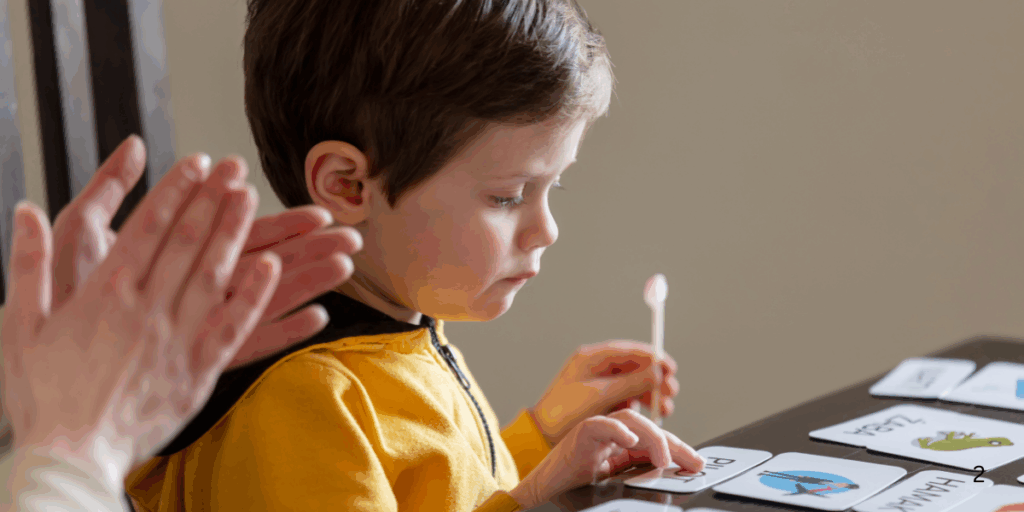
What Is Stimulus Control Transfer in ABA?
Stimulus Control Transfer is a core principle in Applied Behavior Analysis (ABA) that involves shifting the control of a behavior from one stimulus to another. This process is essential for helping children with autism generalize learned behaviors across different settings and situations.
In ABA, a stimulus is any event or object that influences behavior. Stimulus control refers to the degree to which a behavior is influenced by a particular stimulus. When a behavior is under stimulus control, it reliably occurs in the presence of that stimulus. Stimulus Control Transfer shifts this control to more natural and relevant stimuli, facilitating generalization and maintenance of behaviors in everyday life.
Why Stimulus Control Transfer Is Important
ABA therapy aims to teach children to exhibit desired behaviors across environments. Stimulus Control Transfer ensures that behaviors are not solely dependent on therapist prompts but occur in response to natural cues.
For example, a child may initially greet others only when prompted by a therapist saying, “Say hello.” Through stimulus control transfer, the child learns to greet friends and family without verbal prompts, fostering independence. Without effective transfer, behaviors learned in therapy may not extend beyond structured sessions.
Stimulus control transfer also promotes social engagement, communication skills, and adaptive functioning, which are crucial for success in home, school, and community environments.
How Stimulus Control Transfer Works

The process involves several structured steps:
-
Identify the Target Behavior
Determine the specific skill or behavior to teach, such as greeting others, washing hands, or requesting items. -
Select Initial Prompt
Use a prompt (verbal, visual, or physical) that reliably elicits the behavior. -
Gradual Fading of Prompt
Reduce prompts systematically, encouraging the behavior in the presence of the new stimulus. -
Introduce New Stimulus
Present a more natural cue, such as a visual prompt, object, or environmental signal, and reinforce the behavior in response. -
Reinforce and Maintain
Consistently reinforce the behavior when it occurs in response to the natural stimulus to strengthen and maintain it.
Real-Life Examples of Stimulus Control Transfer
Communication Skills:
A child may start using a picture card to request a drink. Gradually, the card is faded, and the child learns to request a drink when seeing the cup, promoting independence.
Social Skills:
A child may initially greet peers only when prompted. Over time, verbal prompts are reduced, and the child learns to greet others naturally in various settings.
Self-Help Skills:
A child learning to brush their teeth may begin with hand-over-hand guidance. Through stimulus control transfer, the child gradually performs the task independently, responding to the toothbrush and toothpaste as natural cues.
Challenges in Stimulus Control Transfer
Achieving stimulus control transfer can be challenging, particularly for children with autism who may have difficulty generalizing behaviors.
Factors influencing success include:
-
Complexity of the behavior
-
Consistency of environmental cues
-
Individual learning history and developmental level
Therapists must tailor interventions carefully and continually assess progress to ensure successful transfer and maintenance of skills.
How Parents Can Support Stimulus Control Transfer
Parents and caregivers play a critical role in extending ABA therapy beyond sessions. BrightSteps trains families to reinforce skills at home, in school, and in the community. Practical strategies include:
-
Identify Natural Cues:
Observe your child’s environment for natural stimuli that can prompt a behavior. For example, seeing soap and a sink can cue handwashing. -
Fade Prompts Gradually:
Reduce verbal or physical prompts over time. Encourage independent behavior while continuing to provide reinforcement when the child responds correctly. -
Practice Across Settings:
Have your child practice skills in multiple environments—home, school, community—to ensure generalization. For instance, a child learning to follow instructions should practice both at home and in public spaces. -
Reinforce Consistently:
Reinforce correct responses immediately and consistently to strengthen stimulus control and maintain new behaviors. -
Collaborate With Therapists:
Work closely with ABA professionals to ensure consistency and receive guidance on implementing stimulus control transfer effectively.
How BrightSteps ABA Supports Stimulus Control Transfer
At BrightSteps, we integrate stimulus control transfer into every ABA therapy program. Our therapists design personalized interventions that move behaviors from prompts to natural cues, ensuring skills are functional and generalized.
We implement these strategies in:
-
In-Home ABA Therapy: Skills are reinforced in the environment where the child feels most comfortable.
-
Clinic-Based ABA Therapy: Structured sessions allow therapists to teach and monitor behaviors under controlled conditions.
-
School-Based ABA Support: Therapists collaborate with educators to help children generalize skills in academic settings.
Parents and caregivers receive training to continue reinforcement at home, ensuring consistency and promoting independence. By combining professional guidance, structured therapy, and parent involvement, BrightSteps helps children apply learned behaviors confidently across daily life.
FAQs
Q: What is stimulus control transfer in ABA?
It is the process of shifting the control of a behavior from one stimulus to another, typically from prompts to natural cues, promoting independence and generalization.
Q: Why is it important?
It ensures learned behaviors occur in everyday settings, allowing children to use skills across home, school, and community environments.
Q: How is it implemented?
Through identifying target behaviors, selecting initial prompts, gradually fading prompts, introducing natural stimuli, and reinforcing responses consistently.
Q: Can parents implement it at home?
Yes, with guidance from ABA therapists. Parents can identify natural cues, fade prompts, practice in multiple settings, and reinforce behaviors consistently.
Q: What challenges may arise?
Challenges include generalizing behaviors across settings, inconsistent cues, and the complexity of certain skills. Personalized strategies help overcome these obstacles.