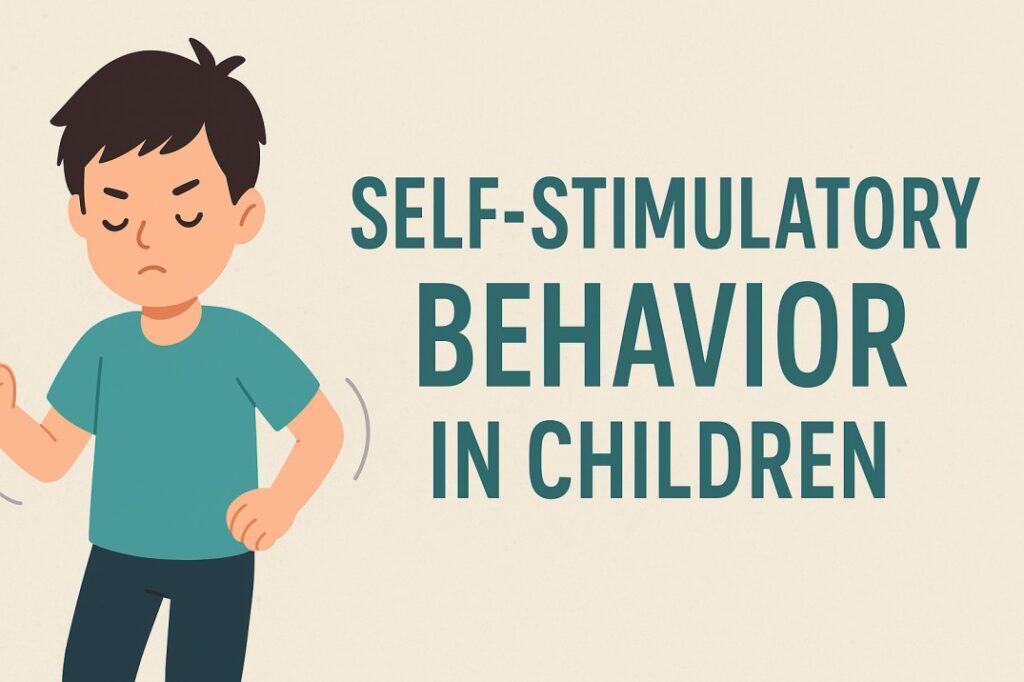
Self-stimulatory behavior, often referred to as “stimming,” is one of the most common traits observed in children with Autism Spectrum Disorder (ASD). While these behaviors can appear unusual or repetitive, they play an important role in helping children regulate their emotions, process sensory input, and interact with the world in ways that feel comfortable to them.
At BrightSteps ABA, we help parents understand these behaviors and provide strategies to guide children toward healthier and socially appropriate alternatives.
What Is Self-Stimulatory Behavior?
Self-stimulatory behavior is defined as repetitive actions that primarily provide sensory stimulation rather than serving a practical or social function. These behaviors can help children feel calm, focused, or entertained, especially when they feel overwhelmed or under-stimulated.
It is important for parents to recognize that stimming is not inherently harmful. Instead, it is a signal that the child is seeking sensory input, coping with stress, or expressing themselves in a way that feels safe.
Types of Self-Stimulatory Behaviors
Self-stimulatory behaviors, or “stimming,” are repetitive actions that help children with Autism Spectrum Disorder (ASD) regulate their emotions, cope with sensory input, or express themselves. These behaviors generally fall into three main categories:
1. Repetitive Body Movements
Repetitive body movements are physical actions that provide sensory feedback. Common examples include:
- Rocking back and forth – This can help children feel grounded and calm when they are anxious or overstimulated.
- Hand-flapping – Often a way for children to express excitement, joy, or nervous energy.
- Twirling, spinning, or jumping – These movements provide vestibular input, which helps the child feel balanced and regulated.
These behaviors can be soothing and serve as a natural coping mechanism to manage excitement, frustration, or sensory overload. While some movements may seem unusual to adults, they are often a critical part of how children process the world around them.
2. Object-Focused Stimulation
Object-focused stimming occurs when a child uses toys or everyday objects primarily for sensory input rather than their intended purpose. Examples include:
- Twirling strings, ribbons, or shoelaces between fingers
- Spinning wheels on toy cars rather than “driving” them as part of imaginative play
- Opening and closing containers repeatedly or stacking and rearranging objects in a precise way
At first glance, these behaviors might appear as regular play. However, closer observation reveals that the child is more interested in the sensory experience such as the feel, movement, or sound of the object than in its functional or social purpose.
3. Rituals and Obsessions
Some self-stimulatory behaviors involve repetitive routines, specific rules, or verbal habits. These behaviors provide predictability and control, which can be comforting for children with ASD. Examples include:
- Lining up toys or objects in a precise order
- Insisting that rules be followed exactly during play or everyday activities
- Verbal perseveration, such as repeating the same phrases, questions, or topics multiple times
Rituals and obsessions are often misunderstood as stubbornness, but they serve an important emotional purpose. They help children feel safe, reduce anxiety, and create a structured environment that supports their sensory and emotional needs.
How Stimming Differs from Typical Behavior?
It’s normal for people to engage in minor repetitive behaviors when bored or stressed, such as tapping a foot, doodling, or fidgeting with a pen. However, for children with ASD, self-stimulatory behavior may be the primary or most preferred way to regulate emotions or enjoy sensory input, unlike typical children who have a broader range of preferred activities.
Why Do Children Engage in Self-Stimulatory Behavior?
Children engage in self-stimulatory behaviors, or “stimming,” for several important reasons:
1. Sensory Stimulation
Many children, especially those with autism, process sensory information differently. Stimming provides sensory input that is satisfying or calming, helping them engage with their environment in a way that feels comfortable.
2. Emotional Regulation
Stimming helps children manage emotions like frustration, stress, or anxiety. For example, a child might flap their hands when excited or pace when anxious. Recognizing these behaviors can help parents and therapists understand what situations may be overwhelming for the child.
3. Communication
Sometimes, stimming serves as a non-verbal way to communicate. It can indicate that a child needs a break, is feeling overstimulated, or is seeking comfort. Observing these signals can help caregivers respond effectively to the child’s needs.
The Importance of Early Intervention
Early intervention is crucial in helping children manage self-stimulatory behaviors. With timely support, children can learn more socially appropriate ways to meet their sensory needs while continuing to benefit from the calming effects of stimming.
At BrightSteps ABA, we use Applied Behavior Analysis (ABA) to:
- Reduce the intensity of disruptive stimming
- Shape behaviors into age-appropriate and socially acceptable alternatives
- Teach children coping strategies for managing stress or sensory overload
- Support families in reinforcing these strategies at home and school
Practical Tips for Parents
Parents can play a key role in helping children manage self-stimulatory behavior:
- Observe Patterns: Keep track of when and where stimming occurs to identify triggers.
- Provide Alternatives: Offer sensory toys or activities that satisfy the same need in a safer or more socially acceptable way.
- Create a Calm Environment: Minimize overwhelming stimuli when possible.
- Positive Reinforcement: Encourage and reward the child for using alternative coping strategies.
- Collaborate with Therapists: Work with ABA therapists to create a consistent plan across home, school, and therapy sessions.
Managing Self-Stimulatory Behavior in School and Social Settings
For children with ASD, stimming may sometimes interfere with learning or social interactions. ABA therapy helps children:
- Learn strategies to self-regulate without drawing unwanted attention
- Participate more comfortably in classrooms and group activities
- Generalize skills learned in therapy to real-life situations
When to Seek Professional Support
While some stimming is harmless, parents should consider professional guidance if:
- The behavior interferes with learning, safety, or social interactions
- The behavior is intense or becomes more frequent over time
- The child appears distressed or frustrated during the behavior
ABA therapy can help children reduce disruptive stimming, teach alternative behaviors, and provide guidance for parents to support development at home.
Conclusion
Self-stimulatory behavior is a natural and common part of life for many children with autism. Understanding why children engage in stimming is the first step toward supporting their growth. With early intervention and consistent ABA therapy from BrightSteps ABA, children can learn to manage self-stimulatory behavior in ways that enhance independence, social interactions, and overall well-being.
If your child engages in self-stimulatory behaviors, contact BrightSteps ABA in Atlanta, GA, to learn how personalized ABA therapy can support their development and daily life.