

If you are wondering when to start ABA therapy, you are not alone. Many parents begin asking this question as soon as they notice delays in communication, trouble with routines, social challenges, or behaviors that are making daily life harder for their child and family. It is a big decision, and it is normal to want to make the right choice at the right time.
In most cases, the best time to start ABA therapy is as soon as concerns become clear or soon after an autism diagnosis. Early support can help children build important skills during a stage of life when learning is happening quickly. At the same time, it is important to know that ABA therapy is not only for very young children. Older children can also benefit when therapy is tailored to their needs, strengths, and goals.
Why Timing Matters In ABA Therapy
The timing of ABA therapy matters because early childhood is a major period of development. During these early years, children are learning how to communicate, interact with others, follow routines, and respond to the world around them. When support begins early, it can help strengthen these foundational skills before challenges become more deeply rooted in everyday life.
That does not mean parents should panic or feel like they are already behind. Every child develops at a different pace, and every family reaches the decision to seek help in their own time. What matters most is recognizing when support could be helpful and taking the next step when you are ready.
Starting earlier can often make it easier to work on language, play, self-help skills, emotional regulation, and behavior support in a natural and consistent way. It can also give parents more tools to support their child at home, in the community, and later in school settings.
What Age Is Best To Start ABA Therapy?
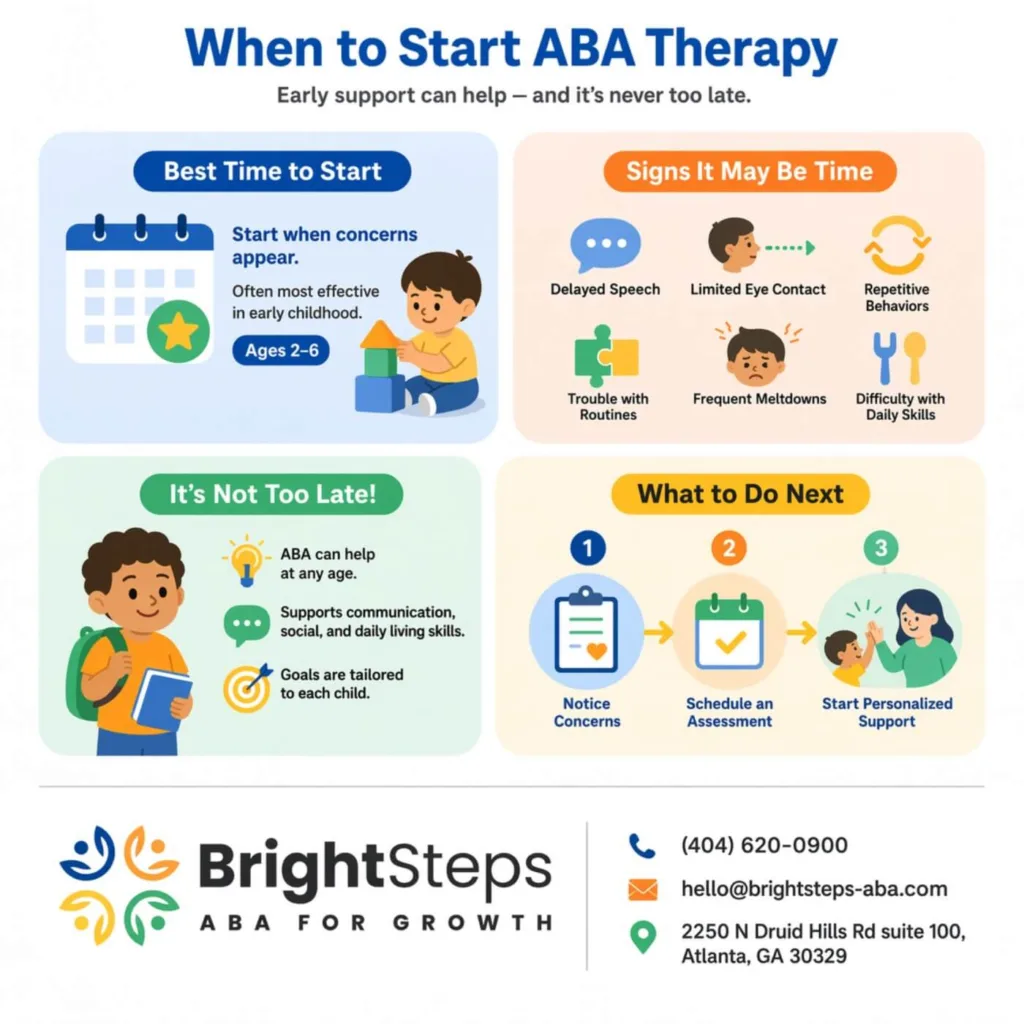
Many families hear that ABA therapy is most effective when started early, and there is truth to that. For many children, the preschool years are an especially valuable time to begin because this is when foundational learning is happening rapidly. Children between the toddler years and early elementary years often show strong progress when therapy focuses on communication, routines, play, and social development.
Still, there is no single perfect age that applies to every child. Some children start therapy at age two or three. Others do not begin until age five, seven, or even later. The right time is not only about age. It is also about what your child needs right now.
A child who is struggling with communication, transitions, safety, or daily routines may benefit from support regardless of whether they are a toddler or school-aged. The goals may look different at different ages, but meaningful progress can still happen.
Signs It May Be Time To Consider ABA Therapy
Parents often ask when they should move from “watching and waiting” to seeking support. While every situation is unique, there are some common signs that may suggest it is time to ask about ABA therapy.
You may want to explore ABA if your child has difficulty communicating wants and needs, struggles with major transitions, has limited interest in social interaction, or shows repetitive behaviors that interfere with daily life. Some children may also have challenges with toileting, dressing, mealtimes, following routines, or playing safely and independently.
For other families, the concern may be behavior-related. This can include aggression, frequent meltdowns, self-injury, eloping, or other unsafe behaviors that create stress at home or school. These situations can feel overwhelming, and parents often need both practical tools and a structured plan to move forward.
The key is not waiting until things become unmanageable. If you are seeing patterns that affect your child’s daily functioning or family life, it may be a good time to speak with a qualified professional about whether ABA therapy could help.
Can ABA Therapy Start Before A Formal Diagnosis?
One of the biggest questions parents have is whether they need to wait for a formal autism diagnosis before starting support. In many cases, families begin exploring services as soon as developmental concerns appear. This is important because delays in evaluation or diagnosis can sometimes slow down access to help.
If your child is showing signs that they are having difficulty with communication, social engagement, routines, or behavior, it is worth asking about available services right away. Even when a full diagnosis is still in process, early action can help families understand what support options may be available and what next steps make sense.
Waiting for everything to feel certain can be frustrating. Many parents already know that something is not quite right, even if they do not yet have a formal answer. Starting the conversation early can help reduce delays and give your child more opportunities for support.
ABA Therapy At Different Ages
ABA therapy can look very different depending on the child’s age and stage of development. That is one reason individualized care matters so much.
Ages 18 Months To 3 Years
At this age, therapy often focuses on the earliest building blocks of development. That may include communication, eye contact, play skills, imitation, attention, and simple routines. Parent involvement is especially important during this stage because young children learn so much through daily interactions at home.
Goals often center on helping the child connect, communicate, and participate more comfortably in family life. Therapy may also help reduce frustration by teaching simple ways to request help, express needs, and tolerate small changes.
Ages 3 To 5
For preschool-aged children, ABA therapy often expands into school-readiness skills. This can include following directions, participating in group routines, improving communication, learning self-help skills, and increasing flexibility during transitions.
This is also a common age for working on play skills and early peer interaction. If a child is preparing for preschool or kindergarten, therapy may help them feel more ready for classroom expectations and daily structure.
Ages 6 And Up
When children begin school or move into the elementary years, therapy goals may shift. ABA can still support communication, but it may also focus more on emotional regulation, independence, classroom behaviors, safety, and social skills.
At this stage, many children benefit from support around friendships, coping with change, following multi-step directions, or managing frustration in more age-appropriate ways. Therapy can also address daily living skills that improve independence at home and in the community.
Older Children And Teens
It is a common myth that ABA therapy is only for younger children. In reality, older children and teens can also benefit, especially when therapy is built around their individual goals. Support may focus on social understanding, flexibility, self-advocacy, organization, personal care routines, and preparing for greater independence.
The most important thing is that therapy remains respectful, meaningful, and appropriate for the child’s age. Older children need goals that match their real-world needs, not the same approach used with toddlers.
Is It Ever Too Late To Start ABA Therapy?
The short answer is no. It is not too late to start ABA therapy just because a child is older.
Early intervention is often encouraged because it can be especially powerful, but that does not mean progress stops after a certain age. Children continue learning throughout childhood and adolescence. With the right goals and a supportive plan, therapy can still improve communication, behavior, independence, and quality of life.
Parents of older children sometimes feel guilty that they did not start sooner. That feeling is understandable, but it is important to move away from guilt and focus on the present. What matters now is identifying where your child needs support and choosing the services that can help today.
What Parents Should Think About Before Starting
The decision to begin ABA therapy is personal, and families should feel informed rather than rushed. One of the first things to consider is your child’s current challenges. Are the concerns mainly around communication, routines, social interaction, school behaviors, or safety? Clear goals can help determine whether ABA is the right fit.
It is also helpful to think about your family’s daily routine. Therapy should support your child without creating unnecessary stress for the household. Schedules, transportation, sibling needs, and parent availability all matter when building a plan that is realistic and consistent.
The therapy setting matters too. Some children do well with in-home ABA therapy, where support can happen in a familiar environment. Others may benefit from clinic-based ABA therapy that offers structure and focused learning opportunities. Some families also explore school-based ABA support when challenges are affecting classroom success. The best setting is the one that fits your child’s needs and your family’s day-to-day life.
Parents should also look closely at the quality of the program. Strong ABA services should be individualized, supervised appropriately, and built around clear goals and measurable progress. Parent involvement should be welcomed, and the approach should feel supportive, respectful, and centered on the child.
How Many Hours Of ABA Therapy Are Needed?
There is no one-size-fits-all answer to this question. Some children need a more intensive schedule, while others benefit from a smaller number of focused sessions each week. The right number of hours depends on the child’s age, goals, learning needs, and daily routine.
More hours do not automatically mean better therapy. A thoughtful, individualized recommendation is far more important than a standard number. Parents should feel comfortable asking why a certain schedule is being suggested and how those hours connect to the child’s goals.
A good therapy plan should feel purposeful. It should support the child’s development while still making room for family life, rest, school, and other important experiences.
What To Expect When Starting ABA Therapy
Getting started with ABA therapy usually begins with an intake process. This is where parents share their concerns, goals, and questions. It is often the first step in understanding what support may be helpful and whether the provider feels like the right fit.
After that, an assessment is typically completed to look at the child’s strengths, skill needs, behaviors, and areas of daily difficulty. This helps shape a treatment plan that is specific to the child rather than generic.
Once therapy begins, goals are targeted in a structured but supportive way. Progress is monitored over time, and adjustments are made as the child grows and changes. Parent and caregiver collaboration is also an important part of the process, because children make the strongest gains when support carries over into everyday life.
BrightSteps ABA supports families in Atlanta with compassionate, individualized care designed around each child’s needs and strengths. Through in-home therapy, clinic-based services, school-based support, and parent collaboration, BrightSteps ABA helps families build skills that matter in daily life while creating a supportive path forward for long-term growth.
Final Thoughts
So, when should you start ABA therapy? In most cases, the answer is as soon as it becomes clear that your child may benefit from extra support. Early action can be helpful, especially during the early developmental years, but it is also important to remember that there is no age where growth suddenly stops.
The best time to start is when your child’s needs are becoming clear and your family is ready to take the next step. Whether your child is a toddler, preschooler, or older, the goal is the same: to provide meaningful support that helps them communicate, learn, and move through daily life with greater confidence and independence.
FAQs
When Should A Child Start ABA Therapy?
A child can start ABA therapy as soon as developmental concerns become clear or soon after an autism diagnosis. In many cases, earlier support can help build communication, social, and daily living skills during important developmental years.
What Is The Best Age To Start ABA Therapy?
There is no single age that is right for every child, but many families begin ABA therapy during the toddler and preschool years. These early years are often a strong time to build foundational skills, though older children can also benefit.
Can ABA Therapy Start Before An Autism Diagnosis?
In some cases, families begin exploring services before a formal diagnosis is completed. If a child is showing delays or behaviors that affect daily life, it is a good idea to ask about available support options as early as possible.
Is ABA Therapy Only For Young Children?
No, ABA therapy is not only for toddlers or preschoolers. It can also help school-aged children and teens when goals are tailored to their age, strengths, and areas of need.
Is It Ever Too Late To Start ABA Therapy?
No, it is not too late. While early intervention can be very valuable, children can still make meaningful progress later when therapy is individualized and focused on the skills they need most.
How Do I Know If My Child May Need ABA Therapy?
Some common signs include delayed communication, difficulty with routines, social challenges, frequent meltdowns, repetitive behaviors, unsafe behaviors, or trouble with daily tasks like toileting, dressing, or mealtimes. If these challenges are affecting daily life, it may be time to ask about an evaluation.
How Many Hours Of ABA Therapy Does A Child Need?
The number of hours depends on the child’s age, goals, and level of support needed. Some children benefit from a more intensive schedule, while others do well with fewer, focused sessions. The best plan should be based on the child’s individual needs.
What Happens During The First ABA Therapy Assessment?
The first assessment usually includes conversations with parents, observation of the child, and a review of strengths, challenges, and goals. This helps create a therapy plan that is personalized rather than one-size-fits-all.
Can ABA Therapy Help With School Readiness?
Yes, ABA therapy can help many children prepare for school by working on communication, routines, transitions, following directions, social interaction, and independence skills.
What Should Parents Look For In An ABA Program?
Parents should look for a program that is individualized, supportive, and supervised by qualified professionals. It should include clear goals, progress tracking, and parent collaboration so skills can carry over into everyday life.
FAQs
When Should A Child Start ABA Therapy?
A child can start ABA therapy as soon as developmental concerns become clear or soon after an autism diagnosis. In many cases, earlier support can help build communication, social, and daily living skills during important developmental years.
What Is The Best Age To Start ABA Therapy?
There is no single age that is right for every child, but many families begin ABA therapy during the toddler and preschool years. These early years are often a strong time to build foundational skills, though older children can also benefit.
Can ABA Therapy Start Before An Autism Diagnosis?
In some cases, families begin exploring services before a formal diagnosis is completed. If a child is showing delays or behaviors that affect daily life, it is a good idea to ask about available support options as early as possible.
Is ABA Therapy Only For Young Children?
No, ABA therapy is not only for toddlers or preschoolers. It can also help school-aged children and teens when goals are tailored to their age, strengths, and areas of need.
Is It Ever Too Late To Start ABA Therapy?
No, it is not too late. While early intervention can be very valuable, children can still make meaningful progress later when therapy is individualized and focused on the skills they need most.
How Do I Know If My Child May Need ABA Therapy?
Some common signs include delayed communication, difficulty with routines, social challenges, frequent meltdowns, repetitive behaviors, unsafe behaviors, or trouble with daily tasks like toileting, dressing, or mealtimes. If these challenges are affecting daily life, it may be time to ask about an evaluation.
How Many Hours Of ABA Therapy Does A Child Need?
The number of hours depends on the child’s age, goals, and level of support needed. Some children benefit from a more intensive schedule, while others do well with fewer, focused sessions. The best plan should be based on the child’s individual needs.
What Happens During The First ABA Therapy Assessment?
The first assessment usually includes conversations with parents, observation of the child, and a review of strengths, challenges, and goals. This helps create a therapy plan that is personalized rather than one-size-fits-all.
Can ABA Therapy Help With School Readiness?
Yes, ABA therapy can help many children prepare for school by working on communication, routines, transitions, following directions, social interaction, and independence skills.
What Should Parents Look For In An ABA Program?
Parents should look for a program that is individualized, supportive, and supervised by qualified professionals. It should include clear goals, progress tracking, and parent collaboration so skills can carry over into everyday life.