

Starting ABA therapy can bring a mix of hope, relief, and a lot of questions. Many Atlanta parents reach this point after months of noticing challenges, speaking with specialists, navigating evaluations, or trying to understand what kind of support will truly help their child. Even after making the decision to explore ABA therapy, it is still normal to feel unsure about what happens next.
The truth is, beginning ABA therapy is not just about choosing a provider and starting services. It is about finding a team that understands your child, respects your family’s goals, and builds a plan that feels supportive in real life. Before therapy begins, it helps to know what quality care should look like, what questions to ask, and what to expect during the early stages of the process.
What ABA Therapy Really Means For Your Child
ABA therapy, or Applied Behavior Analysis, is a structured and individualized approach that helps children build meaningful skills and reduce barriers that affect daily life. For many families, those goals may involve communication, transitions, social interaction, attention, toileting, emotional regulation, or independence with routines.
Good ABA therapy should never feel like a one-size-fits-all program. Every child has different strengths, challenges, preferences, and ways of learning. That means therapy should be shaped around the child rather than forcing the child to fit a rigid program. The most effective support is built on trust, consistency, and goals that matter to the family’s everyday life.
Parents often hear ABA described in clinical terms, but in practice, it should feel practical and helpful. It should support progress that makes life easier at home, in school, and in the community.
What To Do Before Reaching Out To ABA Providers
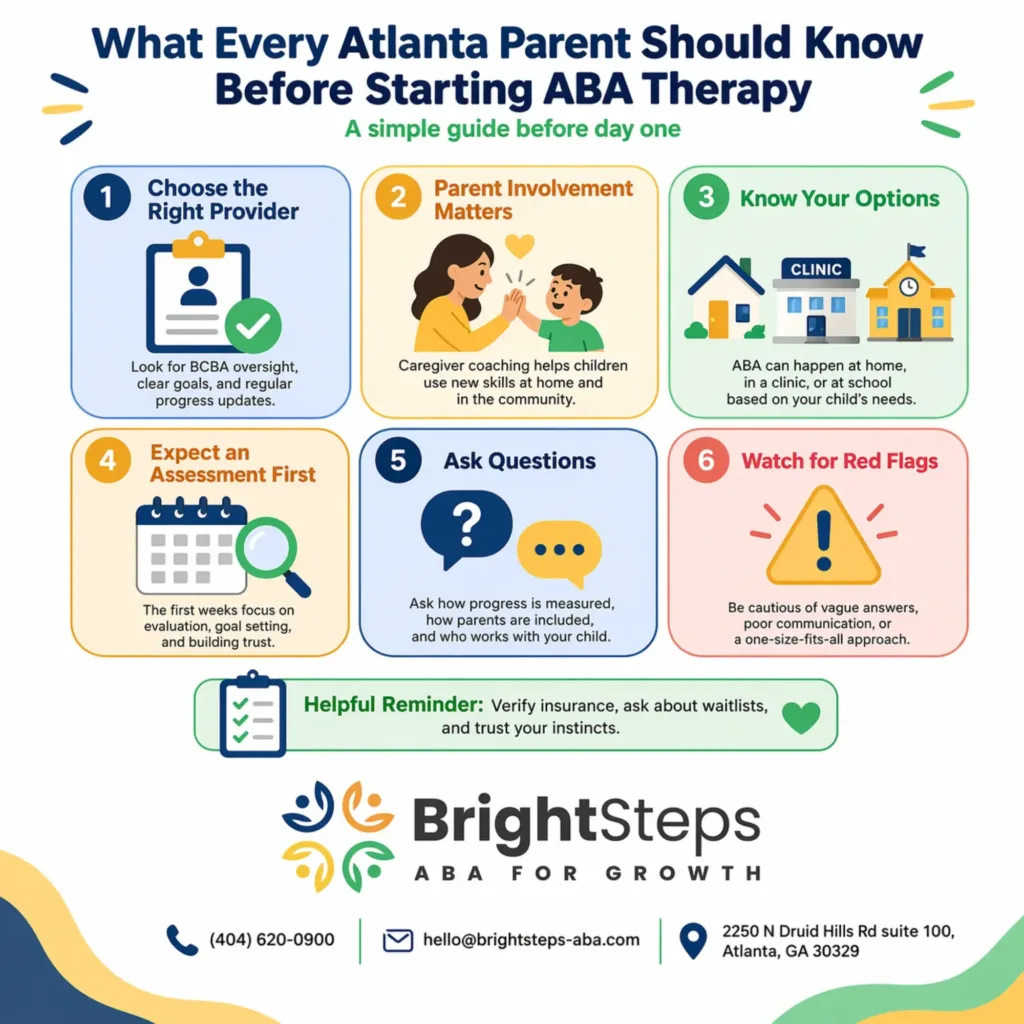
Before calling providers, it helps to gather a few basics and think through your priorities. This does not mean you need to have every answer in place. It simply helps you feel more prepared when the first conversation happens.
Start by collecting any important paperwork you already have, such as diagnosis information, insurance details, referrals if required, and any previous evaluations. Some providers may ask for these items early in the process, while others may begin with a general intake conversation first.
It is also helpful to make a short list of the challenges you most want support with. Maybe your child is having difficulty communicating needs, following routines, tolerating changes, or managing frustration. Maybe social interaction, potty training, or school readiness is a major concern. When parents can clearly explain what daily life looks like, providers can better understand how to build the right plan.
This is also the stage where it helps to prepare emotionally for a process that may take a little time. Some providers in Atlanta have waitlists, and families often need to contact more than one option before finding the right fit.
How To Choose The Right ABA Provider In Atlanta
Choosing an ABA provider is one of the biggest decisions in the process, and it goes beyond availability. A provider may have an opening, but that does not automatically mean they are the right match for your child or your family.
One of the first things parents should look for is qualified clinical oversight. Ask who will design the treatment plan, how often that person will be involved, and how progress is reviewed. You also want to understand who will work directly with your child during sessions and how supervision happens behind the scenes.
A strong provider should be able to explain their process clearly without making it feel confusing or overwhelming. They should talk openly about goals, parent communication, session structure, and how they respond when something is not working. If answers feel vague or overly scripted, that may be a sign to ask more questions.
The right provider should also show genuine interest in your child as a whole person. That means not only asking about challenges, but also wanting to know what your child enjoys, what motivates them, what helps them feel safe, and what success looks like for your family.
Why Parent Involvement Matters So Much
One of the most important things Atlanta parents should know before starting ABA therapy is that parent involvement matters. Therapy should not happen in isolation, with families left out of the process. The best programs build partnership with caregivers from the beginning.
Parent training is often one of the biggest differences between average care and meaningful long-term progress. Children do not only learn during therapy sessions. They also learn during meals, playtime, transitions, school mornings, bedtime routines, and community outings. When parents are supported with practical strategies, those everyday moments become opportunities for progress.
That does not mean parents need to become therapists. It means they should feel informed, coached, and included. A good provider will help caregivers understand the goals, explain how strategies work, and offer guidance that fits naturally into home life.
If a provider does not place much value on parent collaboration, that is something to take seriously before moving forward.
In-Home, Clinic-Based, And School-Based ABA Support
Parents often wonder which setting is best before starting services. The answer depends on the child, the family, and the goals being targeted.
In-home ABA therapy can be especially helpful when the focus is on routines, communication in the natural environment, behavior support at home, or caregiver coaching. It allows strategies to be practiced where many challenges actually happen.
Clinic-Based ABA Therapy can be a good fit for children who benefit from a more structured setting with fewer distractions and more predictable routines. Some clinic environments also create opportunities for social interaction and practicing skills in a consistent space designed for learning.
School-Based ABA Support may help when a child needs assistance with classroom routines, transitions, communication with staff, or behavior support in the educational setting. For some families, school-based support adds another layer of consistency where skills can be practiced during the school day.
In many cases, the best approach is not about declaring one setting better than another. It is about choosing the setting, or combination of settings, that makes the most sense for the child’s needs and the family’s routine.
What To Expect In The First 30 Days
The first month of ABA therapy usually focuses less on immediate change and more on building a strong foundation. This is important for parents to understand because progress does not always look dramatic right away.
Early on, there is often an intake process where caregivers share concerns, routines, developmental history, and priorities. Providers may observe the child, assess current skills, and identify areas where support is needed. During this stage, they are also learning how your child communicates, what helps them feel comfortable, and what motivates them.
After assessment, the treatment plan begins to take shape. Goals should be individualized, realistic, and meaningful to daily life. Rather than focusing only on problem behaviors, a strong plan should look at the skills that can help reduce frustration and increase independence.
This early period is also about rapport. Your child may need time to become comfortable with new people and a new routine. That is not a setback. It is a necessary part of quality care. Trust and connection matter, especially when a child is being asked to learn new things.
Questions You Should Ask Before Saying Yes
Parents do not need to know every technical detail before starting ABA, but they should ask enough questions to understand what kind of care their child will receive.
Ask who creates the goals and how often those goals are reviewed. Ask how progress is measured and how it will be explained to you. Ask how often you will communicate with the clinical team and what parent training looks like in practice.
You should also ask what a typical session looks like. Is the approach play-based when appropriate? How do therapists respond if a child is overwhelmed, refusing, or struggling? How do they respect sensory needs and emotional regulation?
It is also worth asking how staffing changes are handled. Consistency matters, and families deserve transparency about who is working with their child and how support continues if schedules shift.
The goal of these questions is not to challenge the provider. It is to make sure the provider is a strong fit for your child and your family.
Red Flags Parents Should Not Ignore
Before starting ABA therapy, it is important to know that not all programs operate the same way. Parents should trust their instincts if something feels off.
One red flag is poor communication. If a provider cannot clearly explain their process, goals, or expectations, that can lead to confusion later. Another concern is limited parent involvement. Families should never feel shut out of therapy or left guessing about what is happening.
It is also worth paying attention to how a provider talks about behavior. If the language feels overly focused on control, compliance, or “fixing” the child, that may not reflect the kind of supportive and respectful care many families are looking for. Good therapy should focus on helping children build functional skills while honoring their needs, comfort, and individuality.
Another warning sign is unrealistic promises. ABA can be very effective, but no ethical provider should guarantee exact outcomes or rush families into services without taking time to understand the child.
Helping Atlanta Families Make Better Decisions

For families in Atlanta, starting ABA therapy can come with extra layers like traffic, scheduling, school coordination, and balancing care with a busy household routine. That is why convenience and communication matter just as much as qualifications. A provider should not only offer strong clinical care, but also make the process feel manageable for parents who are already carrying a lot. Local families often benefit most from a team that understands the realities of daily life and works with them to create a plan that feels both practical and sustainable.
A Simple Checklist Before You Start
Before making your final decision, it helps to pause and make sure the basics are covered. Confirm what documentation is needed. Verify your insurance and ask about authorization requirements. Understand the provider’s availability and whether there is a waitlist.
Make sure you know who will supervise care, how progress will be shared, and how parent training is included. Compare whether in-home, clinic, or school-based support makes the most sense for your child’s current needs. Most importantly, pay attention to how the provider makes you feel. You should feel heard, respected, and supported from the start.
How BrightSteps ABA Supports Families
At BrightSteps ABA, we believe starting therapy should feel clear, compassionate, and family-centered. We work closely with parents to understand each child’s strengths, challenges, and daily routines, then build individualized support that fits real life. With a focus on meaningful progress, strong parent partnership, and care that meets children where they are, our team is here to help Atlanta families move forward with confidence.
Final Thoughts
Starting ABA therapy is a big step, and it is normal to have questions before day one. The good news is that parents do not need to know everything before they begin. What matters most is understanding the basics, asking thoughtful questions, and choosing a provider that sees your child as an individual rather than a diagnosis.
The right ABA experience should support your child’s growth while also supporting your family. When therapy is personalized, respectful, and built around real-life goals, it can become a valuable tool for helping your child build confidence, communication, and everyday skills that truly matter.
FAQs
What should parents know before starting ABA therapy?
Parents should understand the provider’s qualifications, how goals are created, how progress is measured, and how much parent involvement is expected. It also helps to know what setting may work best and what the first month will likely look like.
Is ABA therapy the same for every child?
No. Quality ABA therapy should always be individualized. Goals, teaching methods, and strategies should be based on the child’s needs, strengths, and daily routines.
How involved should parents be in ABA therapy?
Parents should be actively involved through communication, training, and collaboration. Therapy is most effective when caregivers understand how to support skill development outside of sessions.
Is in-home or clinic-based ABA better?
Neither is automatically better. In-home therapy can support routines at home, while clinic-based therapy can provide structure and consistency. The right choice depends on the child and family.
What happens during the first month of ABA therapy?
The first month usually includes intake, assessment, rapport building, and goal development. It is often focused on understanding the child and creating a strong foundation for therapy.
What are red flags when choosing an ABA provider?
Red flags may include vague communication, little parent involvement, unrealistic promises, unclear supervision, and an approach that feels too focused on compliance instead of meaningful support.