
Potty training can feel like a major milestone for any family. When a child needs more support with communication, transitions, sensory input, or routines, it can also feel more complicated than parents expected. Many families start with good intentions, try a few common tips, and then feel discouraged when progress does not happen right away.
The good news is that potty training does not have to be rushed or handled with pressure. In ABA, the goal is to teach toileting the same way many other daily living skills are taught: one clear step at a time, with support that matches the child’s needs. When the plan is thoughtful, consistent, and individualized, potty training can become more manageable for both children and parents.
Why Potty Training Can Be Challenging
Potty training is not just about sitting on a toilet. It involves body awareness, communication, motor skills, routine changes, and tolerance for a new environment. For some children, one or more of those areas may make the process harder.
A child may not yet notice the feeling of needing to go. Another child may dislike the sound of flushing, the feel of the seat, or the transition away from a preferred activity. Some children can follow bathroom steps when prompted but do not yet initiate on their own. Others may do well with urination but struggle more with bowel movements because of fear, constipation, or previous discomfort.
That is why potty training works best when families look beyond the accidents themselves and focus on what may be making the skill harder to learn.
What ABA Looks Like In Potty Training
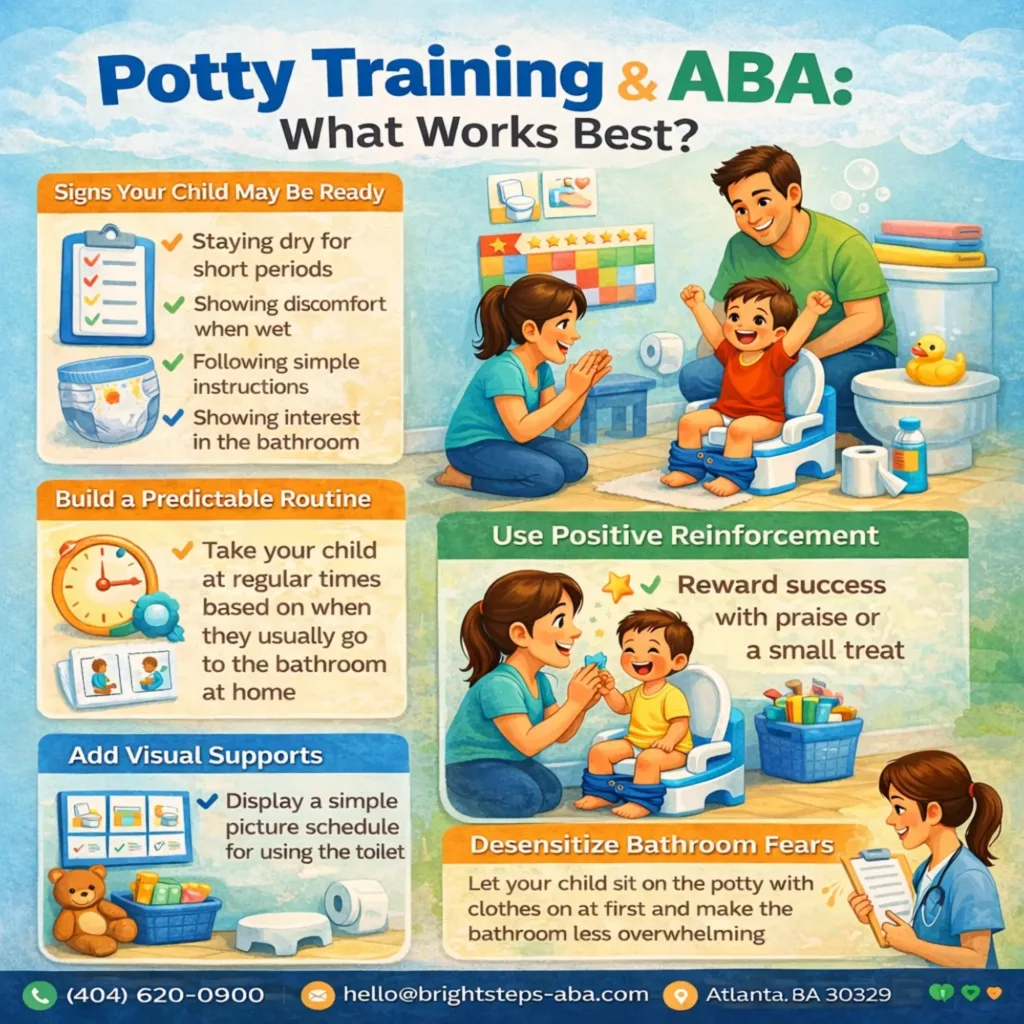
ABA potty training is not about forcing a child to sit on the toilet or expecting quick results from a rigid plan. At its best, it is a structured and supportive approach that helps families understand what the child is ready for, what barriers may be in the way, and how to teach each part of toileting more clearly.
This often includes observing patterns, setting up a consistent routine, using prompts when needed, rewarding success right away, and gradually reducing support as the child becomes more independent. It also means adjusting the plan when something is not working instead of assuming the child is refusing on purpose.
The most effective potty training plans are individualized. What works for one child may not work for another, even within the same family.
Signs A Child May Be Ready To Begin
Readiness does not have to mean a child can already do most of the skill independently. It simply means there are enough early signs to begin teaching in a supportive way.
Some common readiness signs include staying dry for short periods, showing discomfort when wet or soiled, tolerating short sits, following simple directions, having somewhat predictable bathroom patterns, or showing interest in the bathroom routine. A child may also begin pulling at clothing, hiding before a bowel movement, or noticing when they need a diaper change.
If some of these signs are present, it may be a good time to start building toilet-related routines even if the child still needs plenty of help.
Start With A Simple Plan
One of the biggest mistakes families make is starting potty training without first looking for patterns. A more helpful place to start is by paying attention to when the child usually urinates, when bowel movements happen, how long the child stays dry, and what usually happens before an accident.
This does not have to be complicated. Even a few days of simple observation can help parents notice whether the child tends to go after meals, shortly after waking up, or during certain transitions. That information can guide toilet sits so they happen at more likely times rather than randomly throughout the day.
A clear plan also helps everyone stay consistent. When routines change from one day to the next, it becomes harder for the child to understand what is expected.
Use A Predictable Routine
Routine is often one of the most helpful parts of ABA-based potty training. Instead of waiting for the child to always initiate at the beginning, families can start with scheduled bathroom visits based on the child’s natural patterns.
This helps the child connect the bathroom with success. Over time, the routine can be adjusted as accidents decrease and independence improves. The goal is not to keep a child on a fixed schedule forever. The goal is to create enough repetition for the skill to make sense.
Consistency matters here. Using the same bathroom language, the same sequence, and the same expectations helps reduce confusion and supports learning.
Break Toileting Into Smaller Steps
Potty training is easier when families think of it as a sequence of smaller skills instead of one large task. A child may need support with walking to the bathroom, pulling pants down, sitting on the toilet, wiping, flushing, washing hands, and pulling clothes back up.
Some children learn several steps at once. Others need each part taught more slowly. That is okay. Small steps are still real progress.
Breaking the skill down also helps parents identify where the problem actually is. A child who resists the bathroom may not be resisting the whole process. They may be struggling with the transition, the seat, the flushing sound, or the handwashing step at the end.
Positive Reinforcement Matters
Reinforcement is one of the most important tools in ABA potty training. When a child has a successful sit, urinates in the toilet, tells an adult they need to go, or completes a step independently, that progress should be noticed right away.
For some children, praise is enough. For others, a small reward, favorite activity, or highly preferred item may be more motivating. The key is that the reinforcement should be immediate and meaningful to that specific child.
This creates a stronger connection between the bathroom routine and a positive outcome. It also helps keep the process encouraging instead of stressful.
Visual Supports Can Make A Big Difference
Many children benefit from visual support during potty training. A simple picture schedule showing bathroom steps can make the routine easier to understand and easier to remember. Visual reminders can also reduce the amount of verbal prompting needed.
For some children, social stories are helpful. These can explain what happens in the bathroom, what the toilet is for, and what to expect next. For others, visual icons for “pants down,” “sit,” “flush,” and “wash hands” can be enough.
Visuals are especially useful when a child becomes overwhelmed by long verbal directions or when parents want to create more consistency across home, clinic, or school settings.
What To Do When A Child Will Sit But Not Go
This is a common challenge. A child may tolerate the toilet and even sit calmly, but still wait to urinate or have a bowel movement until after getting off.
When this happens, timing often needs to be adjusted. The child may be sitting too early, staying too long, or visiting the bathroom at times that do not match their actual patterns. In some cases, the child may also need stronger reinforcement for success in the toilet.
It helps to stay calm and avoid turning the sit into a struggle. The bathroom should feel predictable and low pressure, not like a test the child keeps failing.
When Pee Progress Happens But Poop Progress Does Not
Families are often surprised by how often bowel training takes longer than urine training. A child may urinate in the toilet consistently but continue to have bowel movements in a diaper or only in a certain place.
This can happen for several reasons. Some children want privacy. Some are uncomfortable with the sensation of bowel movements on the toilet. Others have a history of constipation or painful stools, which makes them more hesitant.
When this happens, it is important not to assume the child is simply being stubborn. Bowel training often needs extra patience, careful observation, and sometimes medical support if constipation is involved.
Address Sensory Barriers Early
Sensory needs can affect potty training more than many people realize. The bathroom may be too bright, too echoey, too cold, or too noisy. The toilet seat may feel unstable. The flushing sound may be overwhelming. Even the smell of the bathroom or the feel of toilet paper may cause discomfort.
When families notice these issues early, they can make simple changes that help the child feel more comfortable. A step stool, soft seat insert, dimmer lighting, or letting the child flush after leaving the stall can all make a difference.
A child is more likely to learn in a bathroom that feels safe and manageable.
Help Children Move Toward Independence
At the start of potty training, most children need some level of prompting. They may need reminders to go, help with clothing, or support staying on the routine. Over time, those prompts should fade.
The goal is not just successful bathroom trips with adult help. The goal is greater independence. That may include walking to the bathroom with less prompting, telling an adult they need to go, or completing more of the routine on their own.
This step matters because true potty training success is about more than fewer accidents. It is about helping the child understand and manage the skill more independently in daily life.
What Parents Should Avoid
Pressure usually does not help potty training move faster. Long sits, repeated frustration, punishment after accidents, and unrealistic expectations can make the process harder for everyone.
It is also important not to compare one child’s timeline to another’s. Some children show quick progress once the plan clicks. Others need a slower approach with more teaching and more consistency across environments.
Parents should also avoid assuming all setbacks mean the plan has failed. Sometimes a child is still learning, and the next step is simply adjusting the schedule, reinforcement, or environment.
When To Ask For More Support
Sometimes families do everything they can at home and still feel stuck. That does not mean they have done anything wrong. It may simply mean the child needs a more individualized plan.
Extra support may be helpful when a child shows strong fear around the bathroom, has ongoing constipation, makes progress in one setting but not another, or continues having frequent accidents without a clear pattern. Professional guidance can also help when families want a structured plan that fits the child’s communication, sensory, and behavioral needs.
At BrightSteps ABA, we support families by looking at the whole picture. Our team works closely with parents to build practical, compassionate strategies that fit real home routines and help children grow in confidence one step at a time.
Final Thoughts
The best potty training approach is the one that matches the child in front of you. For many families, ABA works well because it brings structure, consistency, and individualized support to a skill that can otherwise feel confusing and stressful.
Progress does not have to happen all at once. A child may first learn to tolerate the bathroom, then sit more calmly, then stay dry longer, then begin using the toilet with support, and later move toward independence. Each step counts.