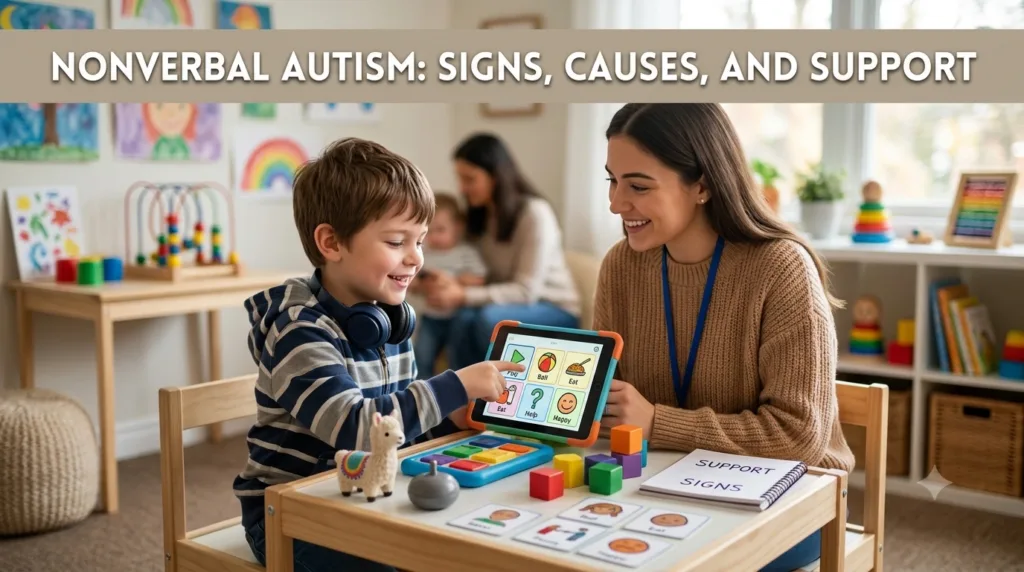
As a parent, one of the earliest problems that you can have when dealing with your children is seeing your child fail to communicate by using words. If your child never uses words or fails to use words as expected, it will result in confusion, doubts, and worries about your child’s future life.
Nonverbal autism can be one explanation for this problem because it is a type of autism where the affected individual is unable to speak or only speaks in a very limited way.
Recognizing the signs, causes, and ways of helping a child with autism spectrum disorder is necessary because this knowledge helps the family deal with the situation and improve the child’s development.
Even if a child fails to speak, it doesn’t mean that he or she lacks intelligence and abilities. This guide explores what nonverbal autism is, the common signs to look for, what current research says about its causes, and practical ways to provide effective support.
What Is Nonverbal Autism?
In clinical and developmental psychology, the concept of nonverbal autism refers to someone on the spectrum who has not learned to speak. It is important to note that the word nonverbal does not mean that a person cannot communicate, and neither does it mean that the person lacks cognitive ability. The term only refers to the fact that the individual is unable to make articulate vocalizations to express his thoughts and feelings.
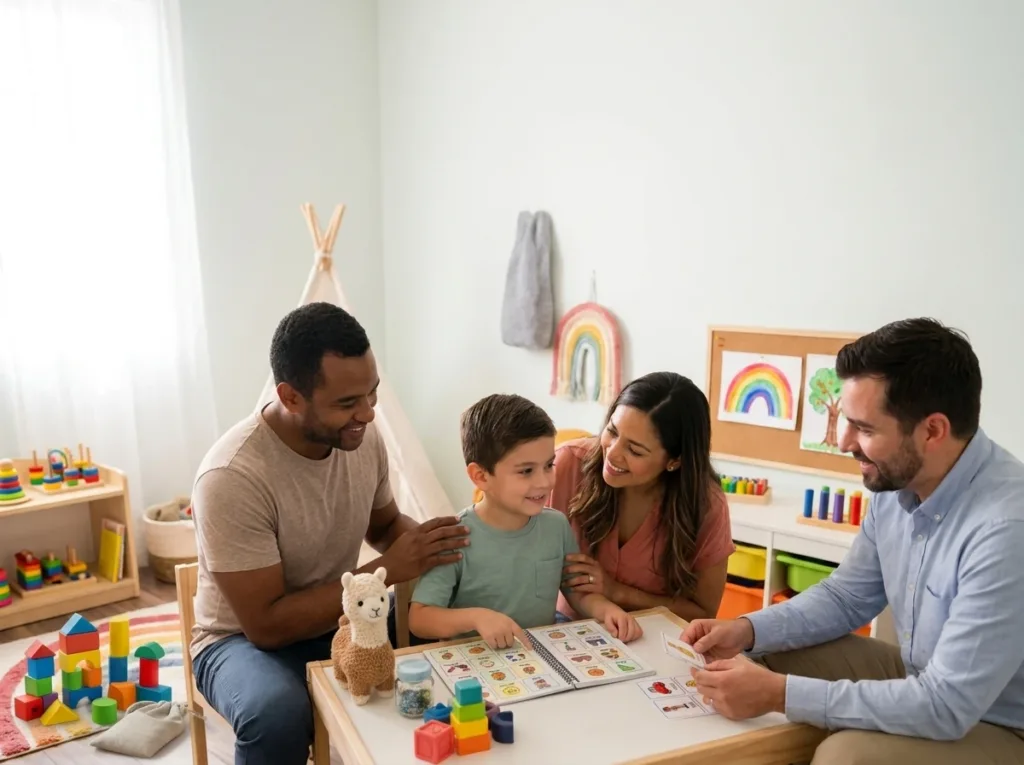
Professionals generally categorize individuals as nonverbal or minimally verbal if they consistently use fewer than 30 to 50 functional words. Instead of spoken words, these individuals interact with the world through a complex matrix of vocalizations, physical gestures, behavioral changes, and alternative visual expressions.
Many assume nonverbal individuals lack the desire for social connection; however, providers offering ABA therapy Atlanta families trust emphasize that the real barrier lies in motor planning and neurological processing needed for expressive speech, not in the intrinsic human drive to relate to others.
Common Signs of Nonverbal Autism
Recognizing the early behavioral presentation of neurodevelopmental differences allows families to move forward with targeted support during critical early windows of brain plasticity. These signs are generally divided into three clear behavioral domains.
Early Communication Signs
Absent Speech: Children might not say single words by 16 months or two-word phrases by two years. Instead of using spoken language to express their daily needs, they often rely on crying or pulling a caregiver toward an object.
Language Regression: Some children start developing typical speech milestones early on but then suddenly lose those words. This regression usually happens between 15 and 24 months, causing them to stop talking completely.
No Pointing: Typically developing kids point to show you something cool. Autistic children often skip this developmental step entirely. They will not point at a bird in the sky just to share the moment with you.
Social and Behavioral Signs
Ignoring Their Name: Children frequently do not turn around or look at you when you call their name. This behavior is so consistent that many parents initially schedule a medical hearing test to check for deafness.
Avoiding Eye Contact: Making direct eye contact can feel incredibly overwhelming or stressful for their nervous system. Because of this sensory overload, their gaze will often slide away or look right past your face.
Repetitive Behaviors: Many children develop intense self-stimulatory habits to soothe themselves. You might notice constant hand-flapping, rocking back and forth, or an absolute requirement to line up their toys in perfect straight lines.
Nonverbal Communication Indicators
Hand Leading: When they want a snack or a toy, they will physically grab your wrist. They use your hand like a physical tool, placing it directly on the refrigerator handle or cabinet knob to open it.
Echolalia: Children might repeat scripts from their favorite TV shows, movies, or songs over and over. They use these exact phrases rhythmically to comfort themselves, rather than to have a back and forth conversation.
Flat Expressions: Their facial expressions might not match what they are feeling inside. They might have a completely neutral look on their face even when they are feeling happy, angry, or very uncomfortable.
What Causes Nonverbal Autism?
Modern neurodevelopmental science views autism as a multifactorial condition arising from an intricate intersection of genetic architectures and neurological developmental trajectories, rather than a single isolated cause.
Genetic Factors
There have been extensive studies done to identify whether or not genetics have anything to do with causing autism. It has been proven that if one of your older siblings is affected by Autism Spectrum Disorder, then the chances of you having autism are higher. Genetics has shown us that there are both inherited genes and new genetic mutations that take place at conception and have nothing to do with the parents’ DNA.
Neurological Differences
Advanced neuroimaging technologies, such as functional MRI (fMRI) and diffusion tensor imaging, reveal clear structural and operational variations in the brains of nonverbal autistic individuals.
Research consistently highlights differences in the microarchitecture of the cerebral cortex, particularly within the left hemisphere regions responsible for speech production (Broca’s area) and language comprehension (Wernicke’s area). Additionally, variations in the corpus callosum can alter the rapid interhemispheric processing required to turn an internal thought into coordinated vocal motor movements.
Environmental Influences
Environmental factors do not cause autism independently; rather, they interact with an underlying genetic vulnerability during early prenatal development.
Validated risk factors identified by researchers include advanced maternal and paternal age at the time of conception, prenatal exposure to specific medications (such as valproic acid), maternal gestational metabolic conditions, and premature birth or low birth weight. Current scientific evidence indicates that these factors gently shift early neurodevelopmental pathways, rather than acting as a direct, singular cause.
Effective Ways to Support a Child with Nonverbal Autism
Providing assistance to children who find it very difficult to speak involves making changes to their surroundings in order to facilitate effective and relaxing communication.
Create More Opportunities for Communication
Good caregivers tend to be excellent at predicting what an uncommunicative child wants and may give them their favorite toy or food without even being asked to do so. Although such behavior is helpful, it unfortunately discourages communication on a daily basis.
To encourage interaction, consider placing desired objects within the child’s line of sight but safely out of physical reach, such as on a high shelf. This natural barrier encourages the child to initiate an interaction by creating a practical, functional opportunity for communication within their daily routine.
Use Visual Supports
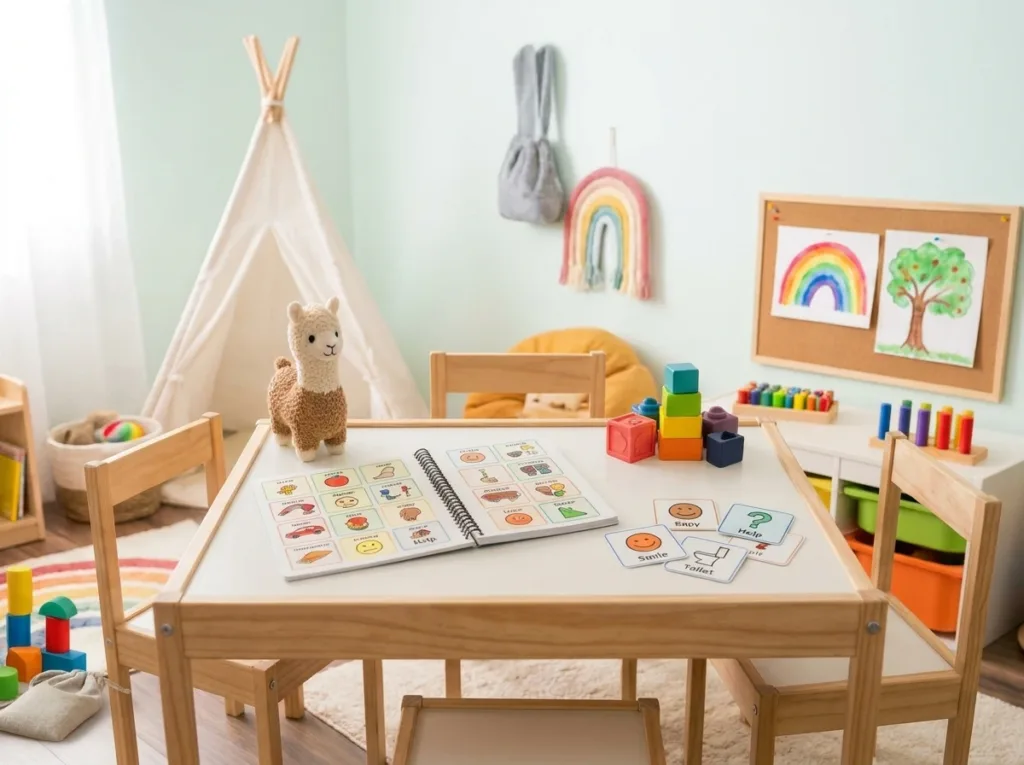
Because auditory processing can often feel fleeting and overwhelming for autistic individuals, the brain’s visual processing pathways frequently become the primary way they learn about the world. Visual supports provide a permanent, static anchor that helps a child understand spoken words.
Visual Schedules: A vertical sequence of clear photographs or line drawings depicting the day’s events (e.g., waking up, breakfast, putting on shoes, therapy, park, bath).
Choice Boards: A simple laminated folder displaying two or three removable image cards representing available options (e.g., apple slices versus yogurt), allowing the child to express autonomy by removing or pointing to their choice.
Visual Cues for Tasks: Step-by-step visual breakdowns placed directly at the site of an activity, such as a three-step illustration showing how to wash hands over the bathroom sink.
Establish Consistent Routines
The nonverbal child will suffer from increased levels of anxiety since he or she is unable to ask questions such as “Where are we going?” and “What will happen next?” The resultant unpredictability creates a continuous level of fight or flight response, leaving less energy available to engage in the learning process.
Creating highly predictable daily routines helps reduce this cognitive load. When a child knows exactly what to expect following a specific sequence of events, their baseline anxiety drops significantly. This predictability fosters an optimal internal state for developing social engagement and communication skills.
Encourage and Celebrate Communication Attempts
When a child has a profound speech delay, any intentional action designed to connect with another human being represents a major developmental milestone. If your child makes eye contact for a split second, produces a novel vocal sound, or hands you a picture card, acknowledge that effort immediately.
Using positive reinforcement tailored to their specific interests helps reinforce the understanding that communication is effective, powerful, and rewarding.
Work Closely With Professionals
A child’s progress accelerates when their home, school, and clinical environments share a unified approach. If a speech therapist uses a specific set of picture icons or gestures during clinical hours, it is incredibly beneficial for parents and educators to adopt those identical visual cues at home and in the classroom.
This consistency prevents confusion, reinforces the child’s developing skills across multiple environments, and helps them generalize their communication tools to different people and settings.
Conclusion
It is true that every child develops at his own pace, but knowing the signs and being able to offer proper assistance could help in improving their quality of life. It should be mentioned that not talking doesn’t mean that a person cannot understand what is said around him. With time and appropriate treatment, the child will be able to develop the needed abilities through an individual approach. Find out how to choose the best autism support for your child at Bright Step ABA.